Brass, Barrels and Bureaucracy #20

This has been an odd winter for New England. It came on strong, with snowstorms and single-digit temperatures arriving early in November. That was followed by a brief stretch of seasonably normal weather in the 30s and 40s before we were plunged back into the cold once again. As the winter has progressed, this pattern has continued, alternating between relatively warm and cold periods even as we moved into the third week of the new year.

Then came this weekend. We, along with roughly half the rest of the country, were hit with a real doozy of a snowstorm. When the flurries finally stopped, we had accumulated about 15 inches of fine, powdery snow. The deep cold means salt is largely ineffective, so the roads remain snow-covered rather than the usual wet, greasy mess.

It’s the most snow the kids have seen in their short lives. Unfortunately, convincing them to go outside and actually experience winter has proven more difficult than expected. I remember being a kid on days like this, happily entertained all day sledding hillsides, building snow forts, and getting into general winter mischief. This generation, it seems, has a much shorter patience window.

SHOT Show 2026 wrapped up as this was being written, and there were no shortage of new product announcements, several of which we’ll get to later in this update. I’m also always anxious to see which new cartridges are added to the SAAMI catalog. For me, that’s the real highlight, and it only happens twice a year, once at SHOT Show and once again in June.

While Marc and I didn’t attend SHOT Show this year, I still somehow managed to catch the full SHOT Show crud: head cold, pink eye, and a lingering cough that refuses to go away. Apparently, this stuff is contagious even at a distance.

Website Updates

We’ve published our deep dive into the 6.8×51mm cartridge, also known as the .277 SIG Fury. This article has been a long time coming, quietly stewing in the back of our minds as we’ve watched the cartridge move from announcement to adoption as a general service round.

Our approach was to step back and look at the last 100 years of military service cartridges, placing the shift to 6.8×51mm into that broader historical context. From there, we examine the cartridge itself, how it performs against existing general service cartridges, where it shows clear advantages, and where it may fall short. You can read the article here. It’s a deeper dive than normal, so expect it to take a little longer than a single bathroom break to read through.

At the end of the day, we do believe the industry will continue moving toward higher service pressures. Traditional brass case design has historically limited service pressures to around 65,000 psi, but newer case designs and alternative materials have begun to push beyond that ceiling. Pressures approaching and, in some cases, exceeding 80,000 psi are now achievable in military and commercial ammunition, fundamentally changing the level of performance a modern service or sporting cartridge can deliver. As brass becomes more expensive relative to alternative case materials, cost pressures may further accelerate this shift. And, of course, novelty will always be a powerful motivator for manufacturers looking to market bleeding-edge performance, barrel life be damned.

This won’t happen overnight, but don’t be surprised to see this trend emerge more clearly over the next decade. In many ways, it’s comparable to the transition from black powder to smokeless powder in terms of performance potential. Does that mean everyone needs to trade in their .30-06 for a 7mm Backcountry? No, I don’t think so.

Marc and I have been watching SHOT Show 2026 from afar. While it’s obviously not as fun as being there in person and handling the firearms ourselves, we’ve still enjoyed following the steady stream of new product announcements—and experiencing the full range of excitement, indifference, and eye-rolling that always comes with them.

One announcement that genuinely caught Marc’s attention was the re-release of the Night Guard series of revolvers from Smith & Wesson. He was excited enough about it to put together a quick write-up outlining what the Night Guard is, where it came from, and why it’s a revolver that’s worth a closer look. That article is now live on the site.

You’ll find it in a newly renamed section of the website. What was previously called Jay’s Commentary has been rebranded as The Holdover. The purpose remains the same: it’s a home for articles and observations that don’t neatly fit into a single category—discussions on firearms, the industry, and related topics that we think are worth talking about, even if they don’t slot cleanly elsewhere.

Time At The Bench

Time at the bench has been a little different lately. Not so much at the workbench, but at my computer bench, studying and trying to understand the VZ-58. Marc probably rolls his eyes every time I mention it, but this little rifle completely captured my attention. I’ve taken it apart, measured it, modeled the components, 3D-printed parts, and checked fits and function. I’ve taken it far enough that it’s starting to resemble a borderline obsession.

Not 100% right, yet, but we are working through it. Should have a good complete model in a couple of weeks.

What started all of this was an attempt to troubleshoot the poor trigger in my rifle. I was able to improve it somewhat, and while the trigger now breaks reliably, there’s still a significant amount of creep. I wanted to understand why, and what could be done about it. That question sent me down the rabbit hole and left me with a solid appreciation for the Czech engineers who devised what I can only describe as one of the simplest semi-automatic actions I’ve ever studied.

For example, the locking block drops by roughly a quarter inch, and that’s all that locks the action. It’s forced downward by the bolt carrier as the carrier moves into battery, and that same carrier uses a wedge to lift the locking block during rearward motion. The result is a very smooth and efficient lock and unlock cycle that seems almost magical—until you take the time to study it.

Plenty of sear engagement comes with plenty of creep.

The design also produces one of the worst triggers known to man, so there’s that. Fortunately, it’s fixable. It’ll never be a benchrest trigger, but it can absolutely be improved to the point where it’s no longer the complete travesty the VZ-58 is known for. I’m working on that article now as I continue to refine what produces the best results on my rifle.

Industry News

This went into effect starting Jan 1st, 2026. Companies pretty much everywhere have  been running sales on Short Barrel Rifles, Short Barreled Shot Guns and Suppressors since well before then. This is a victory that a lot of us didn’t think was going to happen, so it’s nice to be surprised. I have not yet taken advantage of the new $0 tax stamp, but I am hoping to soon.

The irony of sic semper tyrannis appearing on the Virginia state flag is hard to ignore. “Thus always to tyrants” is a reminder that oppressive power has historically been met with resistance—something the Commonwealth’s legislators and executive branch would do well to remember.

Last year, the Democratic Party gained control of all three branches of government in the Commonwealth of Virginia. They are not wasting the moment. During the current session, lawmakers have introduced roughly 25 gun control bills in the House and Senate. Some of the more notable proposals include:

House Bill 217 would effectively ban what it defines as an “assault firearm,” a category broad enough to include most modern semi-automatic rifles and many commonly owned firearms. While the bill does provide a grandfather clause for firearms manufactured prior to July 1, 2026, the definition itself is lengthy and expansive.

Senate Bill 27 and House Bill 21 target the firearms industry directly by attempting to define “responsible conduct,” including restrictions on where, how, and to whom firearms may be marketed.

House Bill 40 seeks to criminalize the home manufacture of firearms, commonly referred to as “ghost guns,” even when built for personal use.

House Bill 700 would impose a mandatory five-day waiting period on firearm purchases.

Senate Bill 38 and House Bill 93 expand the definition of a prohibited person to include individuals who reside with someone deemed prohibited. Under this framework, a law-abiding gun owner could lose their rights solely based on the actions or status of a roommate or household member.

House Bill 217 also includes a provision requiring dealers to collect a $500 tax on each suppressor sold in the state. If enacted, this provision would take effect on July 1, 2026.

House Bill 919 proposes an additional 11 percent tax on all firearms and ammunition, with proceeds directed to a newly created “Virginia Gun Violence Intervention and Prevention Fund.”

It’s easy to dismiss developments in Virginia as “not my state, not my problem,” but that mindset misses the bigger picture. States like Virginia serve as testing grounds for legislation. Bills that survive committee review, floor votes, and legal challenges are refined and reintroduced elsewhere, including at the federal level. If not word-for-word, then in forms that are more restrictive, more efficient, and legally hardened through prior challenges.

What’s most frustrating is the sheer breadth of legislation being proposed. The volume alone makes it likely that some of these bills will pass. Even when court challenges follow, and they almost certainly will, it can take years for the legal system to resolve them. In the meantime, millions of dollars will be spent by both sides fighting these battles in court. That’s money that could have gone toward youth firearm safety programs, mental health initiatives, or other efforts that might actually move the needle on reducing firearm-related deaths.

The Department of Justice is currently defending the registration and tax stamp requirements for suppressors, short-barreled rifles, and short-barreled shotguns under the National Firearms Act. This has angered a large portion of the firearms industry, with many arguing that the administration should direct the DOJ to abandon its defense of these provisions and advocate for their repeal.

I think that approach does the industry a disservice. While it’s an effective way to generate headlines and fundraising dollars, it’s also strategically fragile. In this case, process matters more than outcome. Administrative decisions are inherently temporary, subject to reversal every four years when presidential administrations change.

The courts are the proper avenue for challenging the remaining provisions of the NFA, particularly given the lack of legislative appetite to address the issue in the near term. It is the DOJ’s role to defend laws enacted through the legislative process, and allowing that process to play out in court is essential. A court ruling striking down these provisions as unconstitutional would create binding precedent, preventing future administrations from simply reinstating the same rules through executive action or agency rulemaking. If the courts ultimately uphold the law, the status quo remains, and any change must come through Congress where it belongs.

The courts are not a shortcut around the legislative process. Judicial rulings may feel expedient, but they are inherently fragile, subject to reversal by a different judge, a different panel, or a different court entirely.

By contrast, if the DOJ were to refuse to defend the law, the issue may never be fully resolved on the merits. That risks leaving the underlying constitutional questions unanswered and opens the door for a future administration to reinstate the same rules with little resistance. A durable victory requires a judicial decision, not a temporary political retreat.

I realize this is an unpopular opinion. It isn’t the clean or easy path that many people want. But it’s important to understand why these processes exist, why there is a right way and a wrong way to pursue change, and how attempts to circumvent them can lead to unintended consequences down the road. Our constitutional republic only functions when its rules and processes are respected by all participants. It is the erosion of those processes, by parties on both sides of the aisle, that has fractured the foundation of the republic itself.

New Products

As mentioned earlier, it’s SHOT Show 2026, and new product announcements are coming hard and fast. As with every SHOT Show, there’s no shortage of things that look new, cool, innovative, and supposedly game changing, only to be quietly forgotten a few years later. (Looking at you, 30 Super Carry.) We’ll highlight a few products that caught our attention, but it’ll be interesting to see which of these actually stick in the market and which fade away once the initial buzz wears off.

Weatherby announced the new 25 RPM Weatherby a few weeks ahead of SHOT Show. It’s a .25-caliber cartridge, measuring .257, which places it squarely between the .243 (6mm) and .264 (6.5mm) bore diameters. Weatherby is positioning it as a high-performance quarter-bore, designed to outperform existing options such as the .257 Roberts, .25-06, and 25 Creedmoor.

The cartridge achieves this by combining a chamber design with sufficient freebore to accommodate long, high-BC bullets, paired with a fast 1:7.5 twist rate to stabilize them. It’s also a magnum-class cartridge, with an advertised case capacity of approximately 72.5 grains of water.

So what is the cartridge designed to do?

.473 Bolt Face, same as a .308 / .30-06 and 6.5 Creedmoor

According to Weatherby, the 25 RPM is intended as a long-range hunting cartridge capable of maintaining lethal energy at distances out to 700 yards. Weatherby defines that threshold as retaining more than 1,200 foot-pounds of energy. Personally, I find it frustrating that the industry continues to market ethical game harvests at distances well beyond 300 yards. I’ve spent enough time shooting with a wide range of hunters, and enough time analyzing real-world results to know that most struggle to make consistent, ethical shots past that range. That reality, however, isn’t what sells new rifles or new cartridges.

While Weatherby does a good job comparing this cartridge to other quarter bore options on the market, it would be interesting to see how it stacks up against its 6mm and 6.5mm cousins. Both in terms of down range performance, but also in terms of barrel life?

My wife loves things like Comic-Con and following various TV and superhero fandoms. The rest of my family tends to gravitate toward sports and racing. They have their teams, wear the hats, and buy into the whole ritual. If I had to be lumped into a similar category, I’d admit I’m a fan of Barrett and HK. Those are the two companies that really capture my attention.

So it’s no surprise that I was a little giddy when Barrett announced the MRAD Covert. It’s a takedown version of the MRAD, chambered in either 6.5 Creedmoor or .308 Winchester, and it packs down into a briefcase-sized package. It retains the same fire controls as the standard MRAD, just in a far more compact configuration.

As someone who owns an MRAD in .338 Lapua and would very much like that same rifle in .308 Winchester, I’m probably more excited about this than I should be—especially considering I can’t justify mortgaging the house to buy one. The Covert uses the same swappable barrel system as the rest of the MRAD lineup, allowing a longer barrel to be installed if desired.

Around here in New England, though, a 17-inch barrel is more than adequate for the ranges we typically have access to. I’ve also been spending a lot of time behind rifles with 16-inch barrels and have come to appreciate just how handy they are. Once you’re in position, overall length matters less, but while moving, the shorter configuration really shines. They do bark—especially in .308 Winchester or 6.5 Creedmoor—so running a suppressor adds some length back into the equation.

I like the concept of a rifle that packs away neatly into something easier to transport and less likely to scream “I’m moving a rifle.” Keeping it within the MRAD ecosystem is a major plus for me. MSRP is reportedly $7,000. I’ll quietly add it to the top of my Father’s Day wish list.

My first reaction to this announcement was, “Boy, Henderson Precision is going to be pissed.” Then I read a little further and realized RCBS actually partnered with Henderson to bring this trimmer to market. That’s a refreshing change of pace in an industry where copying one another is often the norm rather than the exception.

This is a power trimmer designed to process a lot of brass, quickly. I’ve seen the Henderson trimmer in action, and you can chew through a bucket of .223 in no time flat. Unlike the Giraud trimmer, this design does not reference the case shoulder. Instead, it references the base of the case to establish trim length. That approach eliminates much of the variation in case length that can come from small differences in shoulder angle or shoulder diameter.

Another advantage of this design is that it allows straight-wall cases to be trimmed as well. While that’s not always a concern, cases can stretch unevenly, particularly when fired in semi-automatic firearms. I ran into this issue frequently when loading .30 Carbine, where uneven case growth made consistent trimming more difficult with shoulder-referenced systems.

The trimmer uses a three-way cutting head that trims to length while simultaneously chamfering and deburring the case mouth. In my experience, three-way heads can be somewhat finicky to adjust, and they tend to be less forgiving if the case mouths aren’t perfectly round. It’ll be interesting to see whether this design proves more tolerant in real-world use.

RCBS has listed an MSRP of $775, which likely puts street pricing closer to $699.99. From what’s been released so far, it appears the unit includes everything needed to trim .22- through .30-caliber cartridges in terms of pilots. It also ships with a collet that accommodates the common .378, .473, and .532-inch case head diameters. That covers the .223 Remington family, the .308 and .30-06 family of cases, and the .300 Winchester Magnum family as well.

The RCBS Match Master Case Trimmer can be found on sale at Optics Planet

Every year at SHOT Show there are all kinds of booths with folks trying to sell their latest invention. Statistically it would seem no matter how good the idea might seem at the time, only a few will go on to be market successes. HM Defense has two new products that caught my eye and fall squarely into “we will see” category.

I enjoy big-bore rifles as much as the next guy. I can’t afford to shoot them very often, but I can certainly appreciate the urge to go bigger. The .50 MAX takes that idea seriously. It’s roughly 0.480 inches longer than the traditional .50 BMG, which allows significantly more powder capacity.

The cartridge is manufactured from 7075-T6 aluminum bar stock by HM Defense, a point they’re quick to emphasize. Compared to a traditional brass case, the aluminum construction is substantially lighter and, at least in theory, cheaper to produce at scale.

From a materials standpoint, 7075-T6 aluminum has properties that could allow for higher operating pressures than conventional brass cases. That means the .50 MAX isn’t necessarily just a capacity-driven improvement. In theory, service pressures could exceed the traditional 65,000 psi ceiling. That said, I was unable to find published data indicating what pressure levels the ammunition is actually loaded to, so that aspect remains speculative for now.

For context, a typical .50 BMG firing a 750–800 grain projectile goes transonic at roughly 1,800 yards. If the .50 MAX can meaningfully push that transition point out toward 2,200 yards, it would represent a real extension of effective range rather than a marginal gain.

There’s also a practical consideration for military use. If the intent is to pair this cartridge with a sniper team, the reduced weight of aluminum-cased ammunition could allow teams to carry more rounds for the same load. The real question, however, is whether this cartridge offers enough advantage to justify its existence beyond the novelty factor. Does it meaningfully improve battlefield capability, or is it one of those technically interesting ideas that struggles to survive the realities of large-scale logistics and standardization?

HM Defense also unveiled a new, patent-pending concept they’re calling the Peak Pressure Reservoir and Booster System. The design incorporates annular cavities machined into the throat and at various points along the barrel. According to HM Defense, these cavities provide additional volume for expanding gases, altering the pressure curve during firing.

In the case of the annular cavity located in the throat, the intent is to control peak pressure by allowing gas to expand into this added volume as the bullet unseats. In theory, this would flatten the pressure curve and allow a cartridge to be loaded hotter without exceeding peak pressure limits.

Additional annular cavities are machined into the bore farther down the barrel. The stated goal here is to provide extra volume for powder to continue burning without increasing barrel length. Unburned powder exiting the muzzle represents wasted energy, so the concept of providing more space for combustion makes sense in theory. If effective, this approach could reduce muzzle blast, lower muzzle gas temperatures, and mitigate the resulting sound and flash.

That said, the more I looked into this system, the more skeptical I became. Several issues stand out immediately.

First is the logistical challenge. If cartridges are loaded hotter to take advantage of this pressure-relief system, those same cartridges cannot safely be fired in a conventional barrel. That implies the need for a dedicated cartridge or strict ammunition segregation, both of which complicate real-world adoption, particularly in military or institutional settings.

Second is fouling and maintenance. Each of these annular cavities introduces additional surfaces that will trap carbon, copper, and fouling. They’re also likely to catch bore patches, snag cleaning cloths, and be especially hard on bristled bore brushes. Over time, buildup in these grooves could become a maintenance headache, particularly for users accustomed to conventional barrel designs.

Finally, there’s the question of practical return on investment. What does this system actually deliver in terms of performance? Are we seeing muzzle velocity gains of 5 percent? 10 percent? More? Are there unintended consequences for accuracy? Could the system introduce a first-round “pop” as trapped oxygen is consumed, similar to what’s observed in suppressors?

None of these questions are meant to disparage the idea itself. I genuinely appreciate seeing companies think outside the box and challenge conventional assumptions. At this point, though, there simply isn’t enough publicly available data to suggest this is a technology poised for widespread adoption. Without clear, measurable gains that outweigh the added cost, complexity, and maintenance burden, it remains an interesting concept rather than a proven solution.

Deals of the Week

Faxon Firearms: If you haven’t checked out their clearance page lately, it might be worth a look, they have some good deals on rifle an pistol barrels. I am eyeballing that 9in 338 ARC AR-15in Pistol Build Barrel, would make for a good SBR Build.

Brownells: Reloading components and supply sale. They are advertising up to 50% off, on select items. Worth a gander, you never know what you might find.

Optics Planet: They have a diverse set of reloading gear and components on sale. For example they are running a 40% off of the Redding National Match reloading die set. That’s a really good price on an excellent set of dies, it’s worth checking out.

That’s all we have this week.

-Jay-

Affiliate Disclosure: If you’d like to support this website, please use our affiliate links. We may earn a small commission if you purchase something after clicking one of our links at no additional cost to you

Brass, Barrels and Bureaucracy #19

So far this winter has been colder and snowier than expected, though only by New England standards. The last few weeks have felt more like January, with single-digit temperatures and actual snowfall making an appearance. Still, in keeping with tradition, we were treated to a brief stretch of 50-degree weather and rain just days before the holiday break. Enough to make the kids and my wife worry we might miss out on that idyllic white Christmas. Thankfully, Father Winter cooperated, and we were rewarded with about three inches of snow.

AI really struggles when it comes to generating images of rounds, rifles and other small details. However it’s still far better graphic design then either Marc or I can do. So we will roll with it.

As always, the holiday season has been busy, maybe more than usual. You can probably blame that on my kids getting older. There’s a certain cruelty in how it works. As your kids grow up, life seems to move faster. As you get older, all you want is for it to slow down.

When it comes to the holidays, I tend to prefer quiet reflection over the pomp and circumstance that comes with family gatherings and holiday parties. The older I get, the more I find myself enduring the holiday spirit rather than flourishing in it. Maybe that makes me a bit of a Scrooge. Either way, productivity has taken a back seat more than I’d care to admit.

No new updates in the last few weeks. However both Marc and I have been working on several different projects for 2026 and we wanted to take the moment to thank everyone who has taken the time to read, recommend, and subscribe to the site. We have had quite the uptick in the last few months, and we have seen articles shoot to the top of the Google search. All of this is driven by the traffic of folks reading, sharing and recommending content to their buddies.

We have also gotten some really good emails voicing support for our content and often times followed up with some questions that made us really think. We are humbled by the support, and are grateful for the questions.

The successful 2025 is fueling some new projects for 2026 that we will be announcing soon.

A little bit quirky to set up but so far I have been pleased with the results.

I’ve been working on a couple of projects over the last few weeks, the first being continued testing of case trimmers. The Derraco Engineering Ugly SRT case trimmer is currently mounted on my drill press, and I’ve been trimming 7.62×39mm brass with it.

This is a fairly affordable case trimmer, though it does have a few quirks. Overall, the performance has been solid and I’m satisfied with the results so far. It may not be perfect, but it gets the job done consistently, which ultimately matters more than polish.

Not my work bench, but strangely dystopian enough that the rifle fits in. Feels like the type of work bench you might find in western Europe.

I’ve also been spending time on my VZ-58 rifle. It’s been several years since I last worked on this build in any meaningful way. I left off the series while trying to get the rifle sighted in, but the trigger was so abysmal that shooting a respectable group was a struggle. Between the trigger issues and life getting in the way, the project ended up on the back burner.

That said, it was never completely forgotten. Every time I picked up the rifle, usually just to move it from one side of the gun cabinet to the other, I was reminded how light and compact it is for what it offers. In many ways, it competes with my AR builds as one of the lightest and handiest rifles I own. There are a few 1950s Soviet-era ergonomics and design choices I would change, but overall I’ve been impressed with the rifle’s form factor.

That realization was enough motivation to revisit the trigger. The topic came up with a coworker, and we took a closer look at it together. The problem became apparent almost immediately. The trigger is a two-stage design with a short first stage and a long, creeping second stage. That second stage rotates the sear until it releases the linear hammer.

The blue sharpies is worn where the sear makes contact. There is about 1/16 of an inch of sear engagement which results in a long creeping trigger pull. For reference, a 1911 has a typical sear engagement of under .020.

In my case, the total trigger travel was borderline too short. The trigger would bottom out at the end of the second stage before completing a clean release. While the sear would eventually let go, it was unpredictable and often required an exaggerated pull to make it happen.

We milled off about .010 which cleaned up the edge, I am tempted to add a 45 degree edge break. By removing .010 we gave enough room for the sear to consistently release the linear hammer before it bottoms out in travel. We still have a huge amount of sear engagement which still results in a long creeping second stage.

To address this, we removed approximately 0.010 inches from the bottom of the linear hammer on the mill. This solved the issue of the trigger running out of travel and made the break far more predictable. There are still additional issues that need to be addressed before I’d consider it a truly livable trigger, but this single change made a significant improvement in both feel and consistency.

HPA and SHORT Act News

It’s been a while since we’ve had an update here, and there have been some meaningful developments. Most notably, the $0 tax stamp goes into effect at the start of the new year. While registration and ATF approval are still required, the elimination of the $200 tax removes a significant financial barrier.

I expect this change to drive a noticeable increase in both short-barreled rifle and suppressor sales, likely starting in Q1 and extending through much of 2026. Suppressors, in particular, are well-positioned to benefit. They’re high-margin products, and that helps explain why so many manufacturers have entered the suppressor market over the past two decades as ownership has become more mainstream.

As a result, I expect to see increased marketing efforts around suppressors moving forward. In contrast, while SBRs and SBSs now face less regulatory friction due to the $0 tax stamp, I don’t anticipate the same level of growth or marketing push. Outside of niche applications and the “cool factor,” they simply don’t offer the same broad utility that suppressors do. That’s my current assessment, though time will tell.

HPA and SHORT Act Developments in the Courts

Building on that topic, there has been some movement in the courts over challenges to the remaining NFA rules for items covered by the HPA and SHORT Act. One of the main cases involved is Brown v. ATF. So far, no court has thrown out the NFA rules, but things are not the same as they were before these new laws passed.

The main argument in the case is simple: the NFA was originally allowed because it was a tax law. Now that the tax has been reduced to zero, the people challenging the law argue that the government no longer has a good reason to keep the registration system. In plain terms, if there’s no tax, they say the government shouldn’t be able to keep enforcing tax-related rules.

So far, courts have not agreed with that argument, but they also have not fully rejected it. Instead, judges are focusing on basic questions first, like who is allowed to sue and whether the ATF still has authority after Congress changed the law. The case is still ongoing, and appeals are expected. This issue is not settled yet, and it will likely take a long time before there is a final answer.

FN has retired commercial sales of the SCAR

The FN SCAR was designed to replace the M4, but ultimately saw limited use and was never widely adopted by the US Military. As many have pointed out, the stock bares resemblance to an Ugg Boot, and once you see it, it’s hard to “unsee it”.

The FN SCAR has come to the end of its run, at least for the general consumer. This family of rifles was FN’s attempt to create a modern replacement for the more than 50-year-old AR-15 design. While the SCAR has seen limited adoption with modern militaries, it never achieved the widespread acceptance a next-generation weapon system needs to truly thrive. FN has indicated the platform will remain available for military and law-enforcement sales, but civilian buyers should no longer expect to see new SCAR rifles on the shelves of local gun stores.

The FN SCAR now joins a long list of proposed AR successors that ultimately failed to move the needle. Notable examples include the Remington ACR and the Robinson Armament XCR. Despite innovative features, these designs struggled to offer a compelling enough advantage over the AR platform to justify their added cost, weight, and logistical complexity. In my own experience, the SCAR felt bulky and heavier than necessary, and I never found a convincing argument for it over a well-sorted AR. In that context, it becomes clear why so many proposed replacements failed to see broad adoption.

The Sig Sauer M7 rifle chambered in the hot 6.8x51mm is designed to provide battle rifle type performance from a carbine length system. Is it just me or does Sig Sauer seem to be getting a lot of military contracts?

The most credible challenger to the AR’s long-standing dominance now appears to be the SIG Sauer M7. That said, the M7 is not without controversy. Its adoption of the 6.8×51mm cartridge represents a significant departure from modern intermediate-caliber doctrine, operating at substantially higher pressures than most contemporary service ammunition. The M7 program signals a return to a battle-rifle philosophy, emphasizing range and penetration at the cost of increased weight and recoil, and marks a shift away from the lighter, intermediate platforms that have dominated military small-arms development for the past half-century.

Recently, Ian McCollum of Forgotten Weapons released a video outlining his concerns with the M7 program and why its adoption may ultimately prove short-lived. It’s a thoughtful critique and well worth watching for anyone interested in where military small-arms development may be headed. You can see the video in the below link.

NOE Bullet Moulds is Back Up and Going

We mentioned back in September that Al Nelson, of NOE Bullet Moulds in Provo, Utah had announced the company was closing its doors. The sudden news led to plenty of speculation about what prompted the decision, and many in the casting community were understandably disappointed. NOE has long offered one of the largest selections of bullet moulds in the industry, and their quality has consistently been first rate.

We’re pleased to report that Al has since announced NOE will continue operations, with new moulds expected to begin shipping in 2026.

With SHOT Show 2026 only a few weeks out, everyone is looking forward to seeing what is going to be announced. We are sure to see new additions to the SAAMI Catalog, new firearms, maybe a new cartridge or two, and if we’re lucky some new reloading gear. This time of year is always a bit slow for new product announcements but here’s a few we managed to dig up.

Ammolyitcs CAP-Lite

This is a project a mutual friend of ours at Ammolytics has been working on. He, along with others, has observed that changes in humidity can significantly impact powder performance, in some cases resulting in velocity swings of 200 fps or more. This is a well-known issue in the ammunition industry. Large manufacturers routinely acclimate their powder before loading to improve batch-to-batch consistency.

Handloaders, however, don’t have that luxury. Many of us deal with seasonal humidity swings ranging from 90% in the summer to 25% or less in the winter. These changes can affect powder moisture content, which in turn can influence burn rate, pressure, and velocity. Ammunition loaded during the dry winter months can produce higher pressures and velocities than ammunition loaded during more humid summer conditions.

The goal of this tool is simple: regulate the humidity inside a powder jug. The included two-way humidity packs maintain the internal environment at approximately 32% relative humidity. They absorb excess moisture when conditions are too humid and release moisture when the air becomes too dry, helping keep the powder in a more consistent state year-round.

We think it’s a clever and practical solution to a real problem many handloaders face, and we wanted to pass the word along. You can check it out here.

Barnes and Seirra TrueData Ballistic Calculator

Barnes Bullets and Sierra Bullets have released a new ballistic calculator that uses Doppler radar data collected by their teams to more accurately model bullet flight. This approach differs from traditional ballistic calculators that rely on a single G1 or G7 ballistic coefficient, which is only an approximation and changes as bullet velocity decreases.

By using the full drag curve generated from Doppler radar measurements for a specific bullet, the calculator can produce a more accurate trajectory solution across the entire flight path. In theory, this allows for more precise elevation and windage predictions than what most conventional ballistic calculators on the market can provide.

I’ve downloaded the app on my iPhone and spent some time exploring it. I plan to take it to the range during my next session to compare its elevation and windage solutions against Ballistic AE, which I’ve been using for years, and see how closely the results line up.

I hope most everyone has gotten their Christmas shopping done by now and if you haven’t, well, you still have time to kick off the New Year right.

Brownell’s – Brownell’s continues to have primers on sale, and it’s the cheapest I have seen CCI primers in awhile. I doubt we will ever see CCI primers below $40/1000. I suspect $60 per brick is around the new normal. I hope I am wrong. They are also having a great sale on various reloading tools. It’s worth checking out.

Palmetto State Armory – PSA is running several Christmas sales on their build kits. Some as much as 50% off. If you’re looking at your next AR build, this may be a great place to pick up a pre bundled build kit.

Faxon Firearms – Faxon is continuing their holiday sales through January, including a sale on suppressors. If you’re looking to take advantage of the $0 NFA tax that begins Jan, 1st here’s a good place to start.

Optics Planet – Optics Planet has a good selection of reloading components and tooling on their “Blazing Deals” and “Clearance” pages. I’ve enabled the filters, so you should see everything that pops up there. It’s a gamble, but I have snagged a few deals by checking back frequently.

Merry Christmas, and a Happy New Year!

Jay

Affiliate Disclosure: If you’d like to support this website, please use our affiliate links. We may earn a small commission if you purchase something after clicking one of our links at no additional cost to you

Brass, Barrels, and Bureaucracy #12

This week was a whirlwind. Work was especially busy, and I got hit by the migraine freight train one day and a cramped up back the next. It’s been exciting, on the bright side, fall weather is setting in, which is much appreciated. Despite the cooler weather, the leaves haven’t begun to turn yet. At least I haven’t seen any trees with yellow leaves yet. We can expect that to begin at any day now.

I took my daughter out to fly her airplane and that did not go as well as I would have liked. I think I finally understand what it means to be tail heavy and why it is so devastating to fly a plane that is tail heavy. It seems like a simple concept but for some reason I couldn’t quite grasp it, until I launched her plane and it kind of just clicked, about two seconds before it completed a flip and nosed dived into the ground.  

I’ve always gotta be careful going to events like these, as I might end up as an attraction, right there in between the goats and the sheep.

My wife and I plan to visit the Tunbridge World’s Fair, I enjoy watching the horse and oxen pulls along with seeing the old engines and machinery. It’s been awhile since I have had the chance to go to that fair but I am looking forward to  it.

Website Updates

When Marc wrote his article on the chronographs it got me thinking about how people generally use their chronographs. I often do not hear much about Standard Deviation, or discussion around how shooters apply that to their loads to figure out if “good enough” is “good enough”. Statistics can be a deep and dark well to dive into especially if you don’t have a background in math or engineering. So, I thought it might be useful to try and explain it in the simplest terms I could muster so folks might get the benefit of using their Chronograph not only to measure what is, but also “what might be”.  See the article below and let me know your thoughts.

Time at the Bench

I opted to switch my Dillon 550 over to rerun that .223 Remington where the COAL was a touch too long. It turned out better than I had thought it would be. Most of the rounds were fine, it was just a couple of lots that I needed to go through. It’s a pretty darn quick process. One die to set the bullet back about .025 and a second die to reapply the crimp.

So close, the tips would just catch on the inside of the mag.

You could argue that I shouldn’t need to reapply the crimp, especially since I am not crimping especially hard. However, I felt it helped the rounds gauge a little better, as does just tuck in the case mouth and prevent it from hanging up. It’s not much, but it’s noticeable.

New Cartridge (for me) 7.62x39mm

Some steel cased Wolf 7.62x39mm I bought several years ago. I have no idea how it got wet, but the box on the left was so corroded it’s probably not worth saving. The two boxes on the right survived unscathed. A personal reminded not to store ammo without some moisture protection.

This is a new cartridge for me. I have been collecting components for a while with the intent of loading ammo for that VZ-58 I built a few years ago. I had some left-over components from some experimentation I did with the .303 British. Both cartridges have a bore diameter that can range from .310 to .312. The bullets I had were some Sierra 125gr Soft Points measuring .311in.

About 8 years ago I was playing with extremely light loads in my .303 British. I still have an assortment of 90gr and 85gr .32 cal bullets that I never used up. The loads worked, velocities were impressive but the accuracy wasn’t there.

I had a few different powders I could have used for this load, but I decided to use H335 as I have an abundance of it at the moment. This powder is on the slow side for what will work, but I don’t mind that. Case fill will always be 100% and I don’t run the risk of overtopping the service pressure.  My big holdback on getting the rifle sighted in will be the trigger, it’s horrendous. I’ve got to figure out how to fix that.

Industry and Legislative News

Rest in Peace Charlie Kirk

This is a news story that has hit closer to home than usual. I lived in and around Orem, Utah for 10 years, and I went to school at Utah Valley University. So, to see the tragedy happen not only in a city I knew well, but at the college campus I knew well, it’s hard to watch. Charlie Kirk was not someone I had in my regular rotation of podcasts but I have heard him speak on a few occasions and I have always appreciated his wit and stalwart defense of the Constitution and of Christian values. It has been absolutely heart breaking to see this unfold.

To those who are not familiar with the area, Orem and Provo Utah are basically one city with two major colleges. Utah Valley University (UVU), and Brigham Young University. Like much of Utah, the community is between 30 to 50% members of the Church of Jesus Christ of Latter-day Saints. In the interest of full disclosure, I am part of that community, having been a member of the church all my life. The crime rate for both cities is lower than the national average.

Utah is unique in that if a school receives state funding, then they must also allow individuals with Conceal Carry Permits to carry on campus. That is true for colleges as well as grade schools. Many people, including myself, regularly carried a firearm while attending UVU. No doubt many of the attendees at Charlie Kirk’s tour were also carrying. It is of no surprise to me that security could be considered “lax”. Charlie was speaking to a large but very friendly crowd, and even the people protesting were tame when it comes to university protests.

Charlie Kirk was standing immediately behind the enclosed walk way that is behind the reflection pools. This is known on campus as the “Hall of Flags” as every flags from every country around the world is hanging.

The campus is set up, like many modern campuses, with large outdoor spaces. However, you could get pretty much anywhere you wanted to go through long corridors. Many of these corridors were also terraces on top and served as additional walkways. Elevated positions, and lots of open spaces, it is everything a sharpshooter could ask for. I wish very much I was not having to write about this, as it is a true tragedy. I suspect it will not be long before the culprit is apprehended. A surplus Mauser .30-06 has already been recovered, and investigators have released pictures of a suspect who remains at large. Whoever the shooter is, the death penalty will likely be on the table.

 Even still, Charlie left behind a wife and two young children, and a conservative movement that happens once in a generation. Whatever punishment or justice is granted it will not replace the truly a good man we lost, and it makes me genuinely concerned about the future of our country. If we can no longer have discourse about ideas, even those which may be unpalatable to some on the left, right or center, then we have lost the Republic.

DOJ Considering Restricting Gun Rights to Trans individuals

With the shooting two weeks ago, and with the recent assassination of Charlie Kirk. The discussion around gun control and gun rights is still very much in the forefront of the public discussion. Reports indicate the Department of Justice is internally deliberating whether or not individuals suffering from Gender Dysphoria should be stripped of their gun rights. This stems from the fact that several of the most recent mass shooters claimed to be suffering from gender dysphoria.

I am somewhat upset that I have to be put in the position of “If you do it to them, then you’ll do it to us.” Literally millions of Americans struggle with mental health issues, including Anxiety, Depression, Attention Deficit Disorder (ADD) and Attention Deficit Hyperactive Disorder (ADHD). Many of our veteran struggle with Post Traumatic Stress Disorder (PTSD) which go hand in hand with depression and anxiety.  So, if we begin to strip rights from individuals with mental health issues, where does that line get drawn? Are we putting our rights into the hands of the American Medical Association, who have been vehemently antigun?

I find it unlikely that any such restriction is going to be held up in court. There are processes to adjudicate individuals as mentally ill, and there are legitimate arguments over that process, and how the Rights are restored to that individual when they recover. This whole “Transgender” issue has irked me in more ways than one, and it irks me a bit more that I am put into a position of “Yes, they are mentally ill, but no you cannot strip their gun rights from them”. If the shoe was on the other foot, I have little doubt that I would be thrown wholesale to the wolves.

Delaware Judge Strikes Down Age Requirement

The minimum age to purchase a handgun was moved to 21 as a response to the Columbine shooting. Since then, there have been many arguments that this was unconstitutional, as the age of majority in the country is 18. Why should we give some people the majority of rights at 18 but withhold the remaining rights at 21?

There have been several lawsuits and verdicts upholding this requirement but now we have at least one instance where a judge found it was unconstitutional, from Delaware of all States. Expect this ruling to be appealed. There are other courts cases in the works dealing with the same thing, and there has been a push in some states to include so called “assault weapons” under the 21 or older requirement.

Steps Towards Conceal Carry National Reciprocity

We have had at least one pending ruling that has the potential to erode the barriers towards the goal of National Reciprocity. At the end of August, it was ruled in Higbie v. James that New York must allow nonresidents to apply for concealed carry permits. This does not exempt them from the state’s extensive requirements, but it’s a step in the right direction. The more concealed carry is normalized, and the more restrictions that are struck down in court the closer we are to getting national reciprocity.

To that end, New Hampshire has joined 24 other states in asking the U.S Supreme Court to review Massachusetts’ onerous permitting requirements. To highlight the severity of the issue, gun owners have to be hyper vigilant when crossing state lines. An arbitrary line on the map is the difference between being law abiding and being a felon. It is not theoretical, in many areas you can go for a walk on a street at the beginning of your walk you are perfectly legal, by the middle of the walk you are a felon. Given the Right to self-defense is a National Right, and not a State Right, then that right should apply regardless of State lines.

Tennessee Mandating Gun Safety Classes in All Grades

One of my biggest frustrations about school is that they do not teach skills that transfer into the real world.  Skills such as:

  • Managing money, what is a credit score, what and how to manage debt, how to file for taxes
  • How Insurance works, what is a deductible, and what it means to be in-network
  • How to vote in local, state and national elections, how to be engaged civilly
  • How to rent an apartment, what tent rights are, how to read a lease, what is a security deposit.
  • First aid and basic health literacy, CPR, when to go to the ER vs. Urgent care,
  • How to write a resume, interview for a job, negotiate a salary, and avoid the pitfalls of internships

This list is probably a mile long, but it’s things we as adults have to figure out on our own. Well in Tennessee, they are going to be teaching gun safety, something that used to be taught nationally through programs like the NRA’s Eddie Eagle.

This guy is still around, it’s really a decent program, but most schools don’t want to touch anything with the NRA’s name attached to it. Which is too bad.

New Guns and Gear

Taurus 66 Combat

Taurus recently announced a new 7 shot 357 Magnum Revolver. This is a medium framed revolver with a double action only hammer. Clearly this is targeting the folks who like to conceal carry a revolver, as the hammer has been bobbed and the barrel is a short 3in. This all but guarantees that the flash is going to be extraordinary and blinding when shot in low light conditions. It does come predrilled and tapped for an optics plate if you’d like to mount a red dot, that is handy.

Wilson Combat SFT9

While not a “New” product it is something Marc was able to put his hands on this week. Wilson Combat announced and released this pistol back in August of 2022. I would deem it a modernized 1911, eliminating the grip safety, as well as offering it in a double stack 9mm. Marc reports that it feels very comfortable in his hands and over all he was impressed with the fit and finish of the handgun. The only thing I would change is the front barrel bushing, while it is iconic 1911, a reverse plug like found on a double stack in 1911 just makes servicing these guns a bit easier.

Hi-Point HP-15

A new addition to the entry level AR-15’s, the HP-15. Honestly, I am like everyone else, when we see a new MSR hit the market, apathetic. Most of us know Hi-Point for their very inexpensive and ugly as sin pistols. Yes, they work, yes they will never win a beauty pageant, even if they are the last contestant standing. Apparently, they have seen a hole in their line up and have decided to make the bold move of offering a budget AR-15. Now to be completely fair, the specs read to be just fine. 1:8 Twist 16in Nitrided barrel, 15in Free Floating M-LOK handguard, M16 Full Profile Bolt Carrier, etc.

The price tag is fair, at $499.99 you’re not going to break the bank. It’s probably just fine for someone looking for their first AR. It’s just a very crowded market right now. AR’s are a dime a dozen, Andro Corp Industries AR-15’s are regularly on sale for $369.99, which is about as low as I have seen an AR go for.  So I am not sure why a company would be looking to launch budget ARs in this market. Yet here we are.

If you have questions, comments, or ideas, we’d love to hear from you.

Jay – jay@theballisticassistant.com

Marc – Marc@theballisticassistant.com

If you’d like to support this website, please use the affiliate links. We get a small commission whenever you purchase something through a link regardless of if it is the product that was linked or not. This is at no additional cost to you. 

Updates for 11-4-2019

It’s Monday, and it’s November. Hopefully no one is too shaken by the time change. Most of the US gains an hour in the fall, and loses one in the spring. I do appreciate the extra hour of sleep in the fall.

We kicked off this past week with continuing to look at the subject of variation. Specifically how to measure variation and its effects on production.

When is Variation a Problem?

Despite the record setting cold here in Utah I was out in the shop and continued to work on several of the projects. The VZ-58 build is now ready for test firing. We’ll have a few write ups on that coming up this week. For now here’s the last few things we had to do to get ready.

VZ-58: Trigger Guard, Stock, & Fire Control Group

VZ-58: Barrel Pin Install

I totally messed up single point cutting the threads on the Draw Die Housing, I ended up having to restart the whole project, but I learned a few things. Everything is written up here.

Bullet Swaging: Draw Die Housing Part 2

The 3D Printer build goes strong. Parts are on order, I’ve been itching to finish the design to the point where I can begin to really get into fabrication. Here’s the little I’ve been able to do so far.

3D Printer: Y-Axis Rods Fabrication

Seems like for every hour of fab there is at least three hours of design work that design work that goes into it.

3D Printer: Designing the Drive Train

As always, thanks for visiting the page, if you have any questions, comments, suggestions, or concerns shoot me an email at jayandrew338@gmail.com. Join the conversation and check us out on my Facebook page The Ballistic Assistant. If you enjoy what you see here, share us with your friends.

Happy Shooting!

Jay Andrew

Updates for 10-14-2019

Happy Monday everyone!

The Ballistic Assistant has surpassed 1100 views! Last week I was just excited to get past 500. Thank you to everyone who’s been reading an enjoying the content. I hope it has been insightful and useful to you.

A few things of note;

I removed the Consulting Page from the site in order to not run afoul of a few forum rules that do not allow for commercial advertisement. Right now I feel it’s more important to build content and let people know of the website then to try and generate income.

I began EMT Classes to get my EMT Basic License. Here in Milford, Utah we have an all volunteer service. This service is paid, and while it’s not much, the pay I receive will be dedicated to maintaining the website, and funding the projects.

At the request of one of our readers I published a write up on how to use QuickLOAD for load development. If you want to see how close QuickLOAD is to real world testing, I’ve included the data in the write up.

QuickLOAD as a Tool for Load Development

We also made some progress on the VZ-58 Build this week.

VZ-58: Barrel Block Construction

VZ-58: Muzzle Brake and Barrel Extension Install

We are about 1/2 through the VZ-58 Build. At this point I am beginning to look forward to see what the next firearm build is going to be. I am considering an Israeli FAL, or a AR 45 PCC. Is there a build you’d like to see? Let me know!

If you haven’t already, check us out on Facebook. We’d love to have discussions over the site content, and hear reader suggestions. Click here for our page.

Have we made errors or mistakes? I’m the writer, editor, and site manager, so I am bound to make lots of mistakes. Let me know! Shoot me an email at jayandrew338@gmail.com.

Thanks for subscribing and being apart of this webpage!

The Ballistic Assistant

Updates for 10-1-2019

I’ve been working on several updates to the site. There is a new Facebook Group that is dedicated to the website. Please check it out here.

The VZ-58 Build has a couple new updates check those out below:

VZ-58: Purchasing the Parts Kit and Receiver

VZ-58: Disassembly of the Receiver Stub

VZ-58: Making the Barrel Legal

We’ve added the “What’s New Page” for posting of website updates so returning visitors can find the new stuff faster.

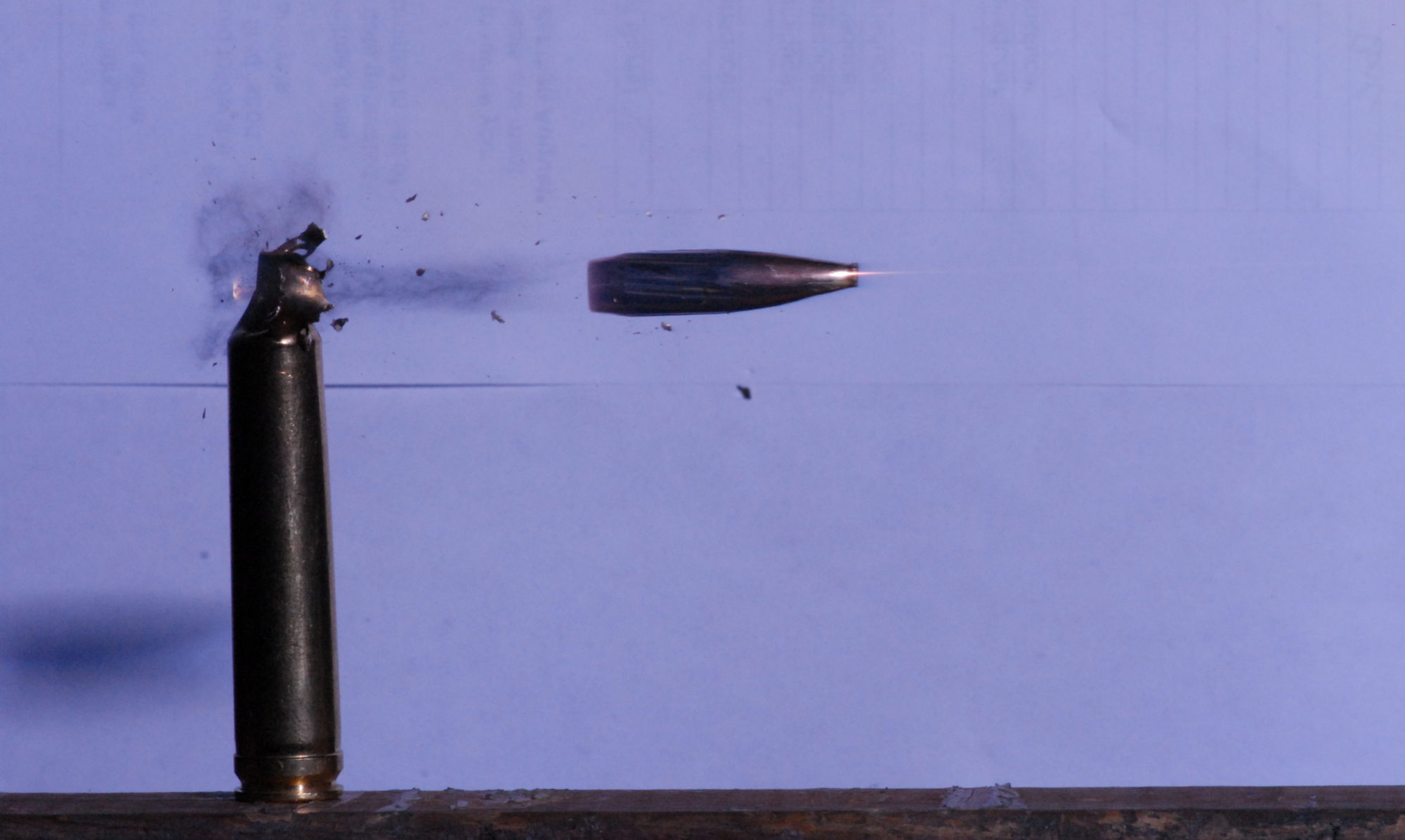
Updated the website header with some new photos of high speed stop action photography. New every time someone visits they should be greeted with a new photo.

Worked on adding menus to the site. Tried to better organize the Ballistic Write Ups by Topic.

Added a website emblem so and figured out how to get rid of the temp URL.

Continuing to learn WordPress and trying to figure out this Online Stuff.