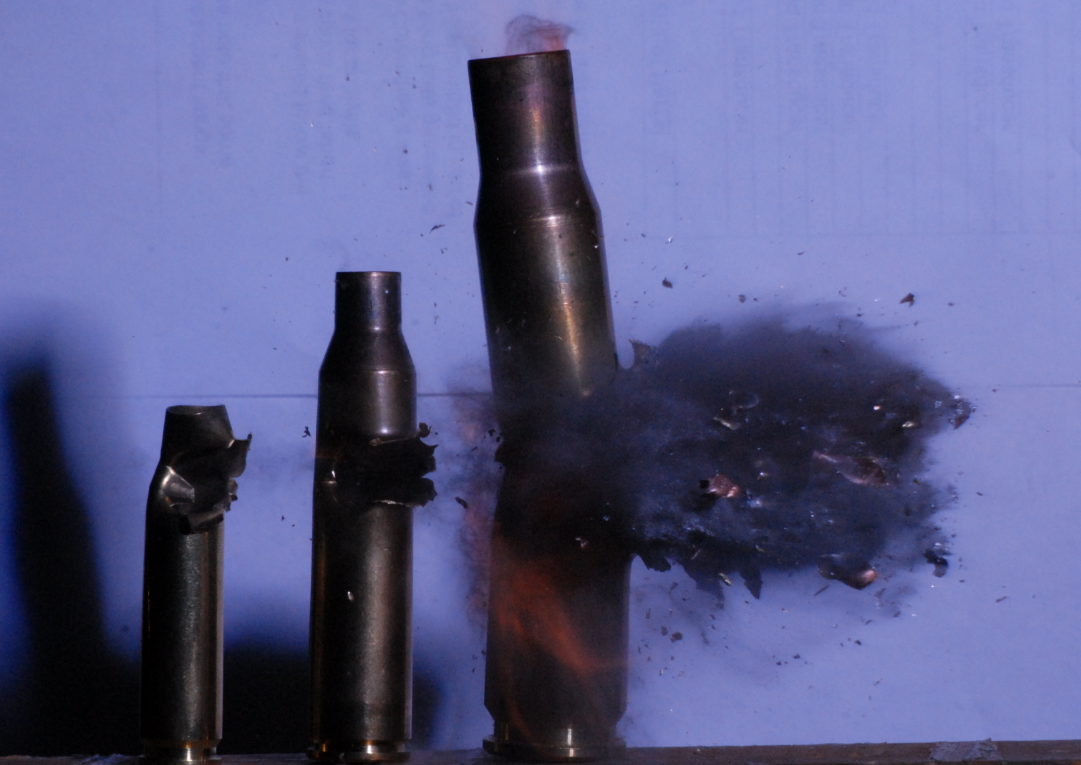

This has been an odd winter for New England. It came on strong, with snowstorms and single-digit temperatures arriving early in November. That was followed by a brief stretch of seasonably normal weather in the 30s and 40s before we were plunged back into the cold once again. As the winter has progressed, this pattern has continued, alternating between relatively warm and cold periods even as we moved into the third week of the new year.
Then came this weekend. We, along with roughly half the rest of the country, were hit with a real doozy of a snowstorm. When the flurries finally stopped, we had accumulated about 15 inches of fine, powdery snow. The deep cold means salt is largely ineffective, so the roads remain snow-covered rather than the usual wet, greasy mess.

It’s the most snow the kids have seen in their short lives. Unfortunately, convincing them to go outside and actually experience winter has proven more difficult than expected. I remember being a kid on days like this, happily entertained all day sledding hillsides, building snow forts, and getting into general winter mischief. This generation, it seems, has a much shorter patience window.
SHOT Show 2026 wrapped up as this was being written, and there were no shortage of new product announcements, several of which we’ll get to later in this update. I’m also always anxious to see which new cartridges are added to the SAAMI catalog. For me, that’s the real highlight, and it only happens twice a year, once at SHOT Show and once again in June.
While Marc and I didn’t attend SHOT Show this year, I still somehow managed to catch the full SHOT Show crud: head cold, pink eye, and a lingering cough that refuses to go away. Apparently, this stuff is contagious even at a distance.
Website Updates
A Deep Dive Into 6.8x51mm
We’ve published our deep dive into the 6.8×51mm cartridge, also known as the .277 SIG Fury. This article has been a long time coming, quietly stewing in the back of our minds as we’ve watched the cartridge move from announcement to adoption as a general service round.
Our approach was to step back and look at the last 100 years of military service cartridges, placing the shift to 6.8×51mm into that broader historical context. From there, we examine the cartridge itself, how it performs against existing general service cartridges, where it shows clear advantages, and where it may fall short. You can read the article here. It’s a deeper dive than normal, so expect it to take a little longer than a single bathroom break to read through.
At the end of the day, we do believe the industry will continue moving toward higher service pressures. Traditional brass case design has historically limited service pressures to around 65,000 psi, but newer case designs and alternative materials have begun to push beyond that ceiling. Pressures approaching and, in some cases, exceeding 80,000 psi are now achievable in military and commercial ammunition, fundamentally changing the level of performance a modern service or sporting cartridge can deliver. As brass becomes more expensive relative to alternative case materials, cost pressures may further accelerate this shift. And, of course, novelty will always be a powerful motivator for manufacturers looking to market bleeding-edge performance, barrel life be damned.
This won’t happen overnight, but don’t be surprised to see this trend emerge more clearly over the next decade. In many ways, it’s comparable to the transition from black powder to smokeless powder in terms of performance potential. Does that mean everyone needs to trade in their .30-06 for a 7mm Backcountry? No, I don’t think so.
Smith and Wesson Night Guard
Marc and I have been watching SHOT Show 2026 from afar. While it’s obviously not as fun as being there in person and handling the firearms ourselves, we’ve still enjoyed following the steady stream of new product announcements—and experiencing the full range of excitement, indifference, and eye-rolling that always comes with them.
One announcement that genuinely caught Marc’s attention was the re-release of the Night Guard series of revolvers from Smith & Wesson. He was excited enough about it to put together a quick write-up outlining what the Night Guard is, where it came from, and why it’s a revolver that’s worth a closer look. That article is now live on the site.
You’ll find it in a newly renamed section of the website. What was previously called Jay’s Commentary has been rebranded as The Holdover. The purpose remains the same: it’s a home for articles and observations that don’t neatly fit into a single category—discussions on firearms, the industry, and related topics that we think are worth talking about, even if they don’t slot cleanly elsewhere.
Time At The Bench
Time at the bench has been a little different lately. Not so much at the workbench, but at my computer bench, studying and trying to understand the VZ-58. Marc probably rolls his eyes every time I mention it, but this little rifle completely captured my attention. I’ve taken it apart, measured it, modeled the components, 3D-printed parts, and checked fits and function. I’ve taken it far enough that it’s starting to resemble a borderline obsession.

What started all of this was an attempt to troubleshoot the poor trigger in my rifle. I was able to improve it somewhat, and while the trigger now breaks reliably, there’s still a significant amount of creep. I wanted to understand why, and what could be done about it. That question sent me down the rabbit hole and left me with a solid appreciation for the Czech engineers who devised what I can only describe as one of the simplest semi-automatic actions I’ve ever studied.
For example, the locking block drops by roughly a quarter inch, and that’s all that locks the action. It’s forced downward by the bolt carrier as the carrier moves into battery, and that same carrier uses a wedge to lift the locking block during rearward motion. The result is a very smooth and efficient lock and unlock cycle that seems almost magical—until you take the time to study it.

The design also produces one of the worst triggers known to man, so there’s that. Fortunately, it’s fixable. It’ll never be a benchrest trigger, but it can absolutely be improved to the point where it’s no longer the complete travesty the VZ-58 is known for. I’m working on that article now as I continue to refine what produces the best results on my rifle.
Industry News
HPA and SHORT Act

This went into effect starting Jan 1st, 2026. Companies pretty much everywhere have been running sales on Short Barrel Rifles, Short Barreled Shot Guns and Suppressors since well before then. This is a victory that a lot of us didn’t think was going to happen, so it’s nice to be surprised. I have not yet taken advantage of the new $0 tax stamp, but I am hoping to soon.
Virgina and Gun Control

Last year, the Democratic Party gained control of all three branches of government in the Commonwealth of Virginia. They are not wasting the moment. During the current session, lawmakers have introduced roughly 25 gun control bills in the House and Senate. Some of the more notable proposals include:
House Bill 217 would effectively ban what it defines as an “assault firearm,” a category broad enough to include most modern semi-automatic rifles and many commonly owned firearms. While the bill does provide a grandfather clause for firearms manufactured prior to July 1, 2026, the definition itself is lengthy and expansive.
Senate Bill 27 and House Bill 21 target the firearms industry directly by attempting to define “responsible conduct,” including restrictions on where, how, and to whom firearms may be marketed.
House Bill 40 seeks to criminalize the home manufacture of firearms, commonly referred to as “ghost guns,” even when built for personal use.
House Bill 700 would impose a mandatory five-day waiting period on firearm purchases.
Senate Bill 38 and House Bill 93 expand the definition of a prohibited person to include individuals who reside with someone deemed prohibited. Under this framework, a law-abiding gun owner could lose their rights solely based on the actions or status of a roommate or household member.
House Bill 217 also includes a provision requiring dealers to collect a $500 tax on each suppressor sold in the state. If enacted, this provision would take effect on July 1, 2026.
House Bill 919 proposes an additional 11 percent tax on all firearms and ammunition, with proceeds directed to a newly created “Virginia Gun Violence Intervention and Prevention Fund.”
It’s easy to dismiss developments in Virginia as “not my state, not my problem,” but that mindset misses the bigger picture. States like Virginia serve as testing grounds for legislation. Bills that survive committee review, floor votes, and legal challenges are refined and reintroduced elsewhere, including at the federal level. If not word-for-word, then in forms that are more restrictive, more efficient, and legally hardened through prior challenges.
What’s most frustrating is the sheer breadth of legislation being proposed. The volume alone makes it likely that some of these bills will pass. Even when court challenges follow, and they almost certainly will, it can take years for the legal system to resolve them. In the meantime, millions of dollars will be spent by both sides fighting these battles in court. That’s money that could have gone toward youth firearm safety programs, mental health initiatives, or other efforts that might actually move the needle on reducing firearm-related deaths.
DOJ and NFA

The Department of Justice is currently defending the registration and tax stamp requirements for suppressors, short-barreled rifles, and short-barreled shotguns under the National Firearms Act. This has angered a large portion of the firearms industry, with many arguing that the administration should direct the DOJ to abandon its defense of these provisions and advocate for their repeal.
I think that approach does the industry a disservice. While it’s an effective way to generate headlines and fundraising dollars, it’s also strategically fragile. In this case, process matters more than outcome. Administrative decisions are inherently temporary, subject to reversal every four years when presidential administrations change.
The courts are the proper avenue for challenging the remaining provisions of the NFA, particularly given the lack of legislative appetite to address the issue in the near term. It is the DOJ’s role to defend laws enacted through the legislative process, and allowing that process to play out in court is essential. A court ruling striking down these provisions as unconstitutional would create binding precedent, preventing future administrations from simply reinstating the same rules through executive action or agency rulemaking. If the courts ultimately uphold the law, the status quo remains, and any change must come through Congress where it belongs.

By contrast, if the DOJ were to refuse to defend the law, the issue may never be fully resolved on the merits. That risks leaving the underlying constitutional questions unanswered and opens the door for a future administration to reinstate the same rules with little resistance. A durable victory requires a judicial decision, not a temporary political retreat.
I realize this is an unpopular opinion. It isn’t the clean or easy path that many people want. But it’s important to understand why these processes exist, why there is a right way and a wrong way to pursue change, and how attempts to circumvent them can lead to unintended consequences down the road. Our constitutional republic only functions when its rules and processes are respected by all participants. It is the erosion of those processes, by parties on both sides of the aisle, that has fractured the foundation of the republic itself.
New Products
As mentioned earlier, it’s SHOT Show 2026, and new product announcements are coming hard and fast. As with every SHOT Show, there’s no shortage of things that look new, cool, innovative, and supposedly game changing, only to be quietly forgotten a few years later. (Looking at you, 30 Super Carry.) We’ll highlight a few products that caught our attention, but it’ll be interesting to see which of these actually stick in the market and which fade away once the initial buzz wears off.
25 RPM Weatherby

Weatherby announced the new 25 RPM Weatherby a few weeks ahead of SHOT Show. It’s a .25-caliber cartridge, measuring .257, which places it squarely between the .243 (6mm) and .264 (6.5mm) bore diameters. Weatherby is positioning it as a high-performance quarter-bore, designed to outperform existing options such as the .257 Roberts, .25-06, and 25 Creedmoor.
The cartridge achieves this by combining a chamber design with sufficient freebore to accommodate long, high-BC bullets, paired with a fast 1:7.5 twist rate to stabilize them. It’s also a magnum-class cartridge, with an advertised case capacity of approximately 72.5 grains of water.
So what is the cartridge designed to do?

According to Weatherby, the 25 RPM is intended as a long-range hunting cartridge capable of maintaining lethal energy at distances out to 700 yards. Weatherby defines that threshold as retaining more than 1,200 foot-pounds of energy. Personally, I find it frustrating that the industry continues to market ethical game harvests at distances well beyond 300 yards. I’ve spent enough time shooting with a wide range of hunters, and enough time analyzing real-world results to know that most struggle to make consistent, ethical shots past that range. That reality, however, isn’t what sells new rifles or new cartridges.
While Weatherby does a good job comparing this cartridge to other quarter bore options on the market, it would be interesting to see how it stacks up against its 6mm and 6.5mm cousins. Both in terms of down range performance, but also in terms of barrel life?
Barrett MRAD Covert
My wife loves things like Comic-Con and following various TV and superhero fandoms. The rest of my family tends to gravitate toward sports and racing. They have their teams, wear the hats, and buy into the whole ritual. If I had to be lumped into a similar category, I’d admit I’m a fan of Barrett and HK. Those are the two companies that really capture my attention.

So it’s no surprise that I was a little giddy when Barrett announced the MRAD Covert. It’s a takedown version of the MRAD, chambered in either 6.5 Creedmoor or .308 Winchester, and it packs down into a briefcase-sized package. It retains the same fire controls as the standard MRAD, just in a far more compact configuration.
As someone who owns an MRAD in .338 Lapua and would very much like that same rifle in .308 Winchester, I’m probably more excited about this than I should be—especially considering I can’t justify mortgaging the house to buy one. The Covert uses the same swappable barrel system as the rest of the MRAD lineup, allowing a longer barrel to be installed if desired.

Around here in New England, though, a 17-inch barrel is more than adequate for the ranges we typically have access to. I’ve also been spending a lot of time behind rifles with 16-inch barrels and have come to appreciate just how handy they are. Once you’re in position, overall length matters less, but while moving, the shorter configuration really shines. They do bark—especially in .308 Winchester or 6.5 Creedmoor—so running a suppressor adds some length back into the equation.
I like the concept of a rifle that packs away neatly into something easier to transport and less likely to scream “I’m moving a rifle.” Keeping it within the MRAD ecosystem is a major plus for me. MSRP is reportedly $7,000. I’ll quietly add it to the top of my Father’s Day wish list.
RCBS Match Master
My first reaction to this announcement was, “Boy, Henderson Precision is going to be pissed.” Then I read a little further and realized RCBS actually partnered with Henderson to bring this trimmer to market. That’s a refreshing change of pace in an industry where copying one another is often the norm rather than the exception.

This is a power trimmer designed to process a lot of brass, quickly. I’ve seen the Henderson trimmer in action, and you can chew through a bucket of .223 in no time flat. Unlike the Giraud trimmer, this design does not reference the case shoulder. Instead, it references the base of the case to establish trim length. That approach eliminates much of the variation in case length that can come from small differences in shoulder angle or shoulder diameter.
Another advantage of this design is that it allows straight-wall cases to be trimmed as well. While that’s not always a concern, cases can stretch unevenly, particularly when fired in semi-automatic firearms. I ran into this issue frequently when loading .30 Carbine, where uneven case growth made consistent trimming more difficult with shoulder-referenced systems.
The trimmer uses a three-way cutting head that trims to length while simultaneously chamfering and deburring the case mouth. In my experience, three-way heads can be somewhat finicky to adjust, and they tend to be less forgiving if the case mouths aren’t perfectly round. It’ll be interesting to see whether this design proves more tolerant in real-world use.
RCBS has listed an MSRP of $775, which likely puts street pricing closer to $699.99. From what’s been released so far, it appears the unit includes everything needed to trim .22- through .30-caliber cartridges in terms of pilots. It also ships with a collet that accommodates the common .378, .473, and .532-inch case head diameters. That covers the .223 Remington family, the .308 and .30-06 family of cases, and the .300 Winchester Magnum family as well.
The RCBS Match Master Case Trimmer can be found on sale at Optics Planet
HM Defense .50 MAX and Annular Chamber
Every year at SHOT Show there are all kinds of booths with folks trying to sell their latest invention. Statistically it would seem no matter how good the idea might seem at the time, only a few will go on to be market successes. HM Defense has two new products that caught my eye and fall squarely into “we will see” category.
50 MAX Cartridge

I enjoy big-bore rifles as much as the next guy. I can’t afford to shoot them very often, but I can certainly appreciate the urge to go bigger. The .50 MAX takes that idea seriously. It’s roughly 0.480 inches longer than the traditional .50 BMG, which allows significantly more powder capacity.
The cartridge is manufactured from 7075-T6 aluminum bar stock by HM Defense, a point they’re quick to emphasize. Compared to a traditional brass case, the aluminum construction is substantially lighter and, at least in theory, cheaper to produce at scale.
From a materials standpoint, 7075-T6 aluminum has properties that could allow for higher operating pressures than conventional brass cases. That means the .50 MAX isn’t necessarily just a capacity-driven improvement. In theory, service pressures could exceed the traditional 65,000 psi ceiling. That said, I was unable to find published data indicating what pressure levels the ammunition is actually loaded to, so that aspect remains speculative for now.
For context, a typical .50 BMG firing a 750–800 grain projectile goes transonic at roughly 1,800 yards. If the .50 MAX can meaningfully push that transition point out toward 2,200 yards, it would represent a real extension of effective range rather than a marginal gain.
There’s also a practical consideration for military use. If the intent is to pair this cartridge with a sniper team, the reduced weight of aluminum-cased ammunition could allow teams to carry more rounds for the same load. The real question, however, is whether this cartridge offers enough advantage to justify its existence beyond the novelty factor. Does it meaningfully improve battlefield capability, or is it one of those technically interesting ideas that struggles to survive the realities of large-scale logistics and standardization?
HM Defense Peak Pressure Reservoir and Booster System
HM Defense also unveiled a new, patent-pending concept they’re calling the Peak Pressure Reservoir and Booster System. The design incorporates annular cavities machined into the throat and at various points along the barrel. According to HM Defense, these cavities provide additional volume for expanding gases, altering the pressure curve during firing.

In the case of the annular cavity located in the throat, the intent is to control peak pressure by allowing gas to expand into this added volume as the bullet unseats. In theory, this would flatten the pressure curve and allow a cartridge to be loaded hotter without exceeding peak pressure limits.
Additional annular cavities are machined into the bore farther down the barrel. The stated goal here is to provide extra volume for powder to continue burning without increasing barrel length. Unburned powder exiting the muzzle represents wasted energy, so the concept of providing more space for combustion makes sense in theory. If effective, this approach could reduce muzzle blast, lower muzzle gas temperatures, and mitigate the resulting sound and flash.

That said, the more I looked into this system, the more skeptical I became. Several issues stand out immediately.
First is the logistical challenge. If cartridges are loaded hotter to take advantage of this pressure-relief system, those same cartridges cannot safely be fired in a conventional barrel. That implies the need for a dedicated cartridge or strict ammunition segregation, both of which complicate real-world adoption, particularly in military or institutional settings.
Second is fouling and maintenance. Each of these annular cavities introduces additional surfaces that will trap carbon, copper, and fouling. They’re also likely to catch bore patches, snag cleaning cloths, and be especially hard on bristled bore brushes. Over time, buildup in these grooves could become a maintenance headache, particularly for users accustomed to conventional barrel designs.
Finally, there’s the question of practical return on investment. What does this system actually deliver in terms of performance? Are we seeing muzzle velocity gains of 5 percent? 10 percent? More? Are there unintended consequences for accuracy? Could the system introduce a first-round “pop” as trapped oxygen is consumed, similar to what’s observed in suppressors?
None of these questions are meant to disparage the idea itself. I genuinely appreciate seeing companies think outside the box and challenge conventional assumptions. At this point, though, there simply isn’t enough publicly available data to suggest this is a technology poised for widespread adoption. Without clear, measurable gains that outweigh the added cost, complexity, and maintenance burden, it remains an interesting concept rather than a proven solution.
Deals of the Week
That’s all we have this week.
-Jay-
Affiliate Disclosure: If you’d like to support this website, please use our affiliate links. We may earn a small commission if you purchase something after clicking one of our links at no additional cost to you