
So far this winter has been colder and snowier than expected, though only by New England standards. The last few weeks have felt more like January, with single-digit temperatures and actual snowfall making an appearance. Still, in keeping with tradition, we were treated to a brief stretch of 50-degree weather and rain just days before the holiday break. Enough to make the kids and my wife worry we might miss out on that idyllic white Christmas. Thankfully, Father Winter cooperated, and we were rewarded with about three inches of snow.

As always, the holiday season has been busy, maybe more than usual. You can probably blame that on my kids getting older. There’s a certain cruelty in how it works. As your kids grow up, life seems to move faster. As you get older, all you want is for it to slow down.
When it comes to the holidays, I tend to prefer quiet reflection over the pomp and circumstance that comes with family gatherings and holiday parties. The older I get, the more I find myself enduring the holiday spirit rather than flourishing in it. Maybe that makes me a bit of a Scrooge. Either way, productivity has taken a back seat more than I’d care to admit.
Website Updates
No new updates in the last few weeks. However both Marc and I have been working on several different projects for 2026 and we wanted to take the moment to thank everyone who has taken the time to read, recommend, and subscribe to the site. We have had quite the uptick in the last few months, and we have seen articles shoot to the top of the Google search. All of this is driven by the traffic of folks reading, sharing and recommending content to their buddies.
We have also gotten some really good emails voicing support for our content and often times followed up with some questions that made us really think. We are humbled by the support, and are grateful for the questions.
The successful 2025 is fueling some new projects for 2026 that we will be announcing soon.
Time at the Bench
Derraco Engineering Ugly SRT Trimmer

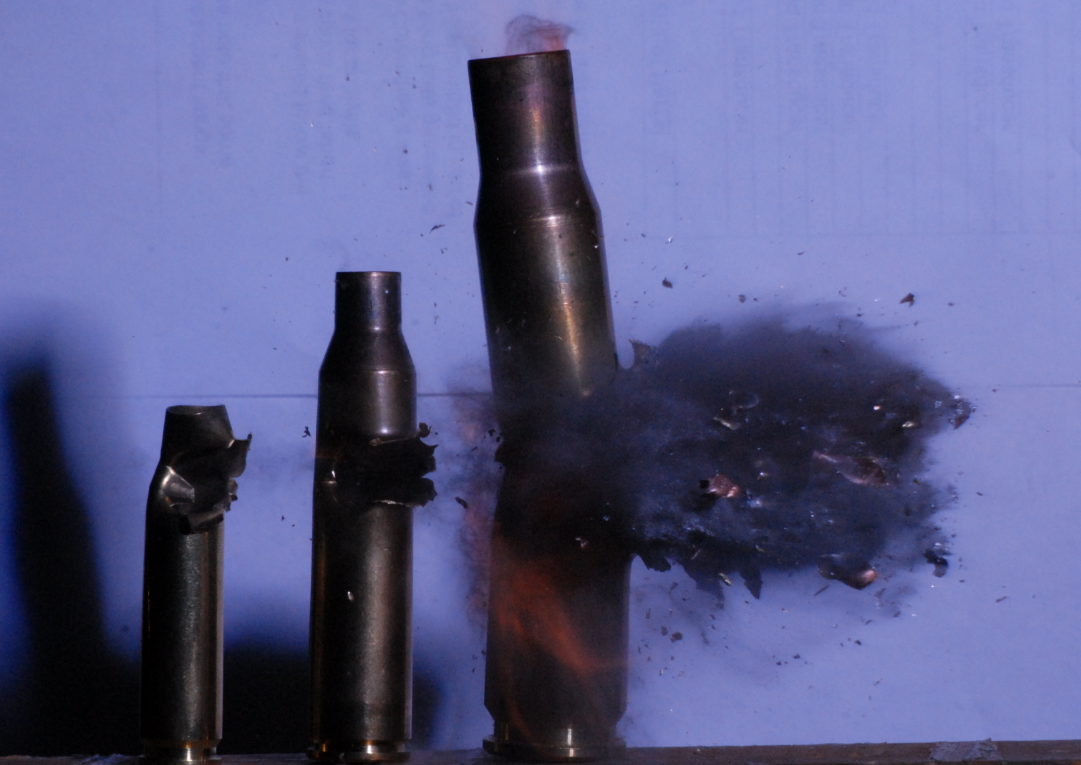
I’ve been working on a couple of projects over the last few weeks, the first being continued testing of case trimmers. The Derraco Engineering Ugly SRT case trimmer is currently mounted on my drill press, and I’ve been trimming 7.62×39mm brass with it.
This is a fairly affordable case trimmer, though it does have a few quirks. Overall, the performance has been solid and I’m satisfied with the results so far. It may not be perfect, but it gets the job done consistently, which ultimately matters more than polish.
VZ-58 Trigger Job

I’ve also been spending time on my VZ-58 rifle. It’s been several years since I last worked on this build in any meaningful way. I left off the series while trying to get the rifle sighted in, but the trigger was so abysmal that shooting a respectable group was a struggle. Between the trigger issues and life getting in the way, the project ended up on the back burner.
That said, it was never completely forgotten. Every time I picked up the rifle, usually just to move it from one side of the gun cabinet to the other, I was reminded how light and compact it is for what it offers. In many ways, it competes with my AR builds as one of the lightest and handiest rifles I own. There are a few 1950s Soviet-era ergonomics and design choices I would change, but overall I’ve been impressed with the rifle’s form factor.
That realization was enough motivation to revisit the trigger. The topic came up with a coworker, and we took a closer look at it together. The problem became apparent almost immediately. The trigger is a two-stage design with a short first stage and a long, creeping second stage. That second stage rotates the sear until it releases the linear hammer.

In my case, the total trigger travel was borderline too short. The trigger would bottom out at the end of the second stage before completing a clean release. While the sear would eventually let go, it was unpredictable and often required an exaggerated pull to make it happen.

To address this, we removed approximately 0.010 inches from the bottom of the linear hammer on the mill. This solved the issue of the trigger running out of travel and made the break far more predictable. There are still additional issues that need to be addressed before I’d consider it a truly livable trigger, but this single change made a significant improvement in both feel and consistency.
Industry News
HPA and SHORT Act News
It’s been a while since we’ve had an update here, and there have been some meaningful developments. Most notably, the $0 tax stamp goes into effect at the start of the new year. While registration and ATF approval are still required, the elimination of the $200 tax removes a significant financial barrier.
I expect this change to drive a noticeable increase in both short-barreled rifle and suppressor sales, likely starting in Q1 and extending through much of 2026. Suppressors, in particular, are well-positioned to benefit. They’re high-margin products, and that helps explain why so many manufacturers have entered the suppressor market over the past two decades as ownership has become more mainstream.
As a result, I expect to see increased marketing efforts around suppressors moving forward. In contrast, while SBRs and SBSs now face less regulatory friction due to the $0 tax stamp, I don’t anticipate the same level of growth or marketing push. Outside of niche applications and the “cool factor,” they simply don’t offer the same broad utility that suppressors do. That’s my current assessment, though time will tell.
HPA and SHORT Act Developments in the Courts
Building on that topic, there has been some movement in the courts over challenges to the remaining NFA rules for items covered by the HPA and SHORT Act. One of the main cases involved is Brown v. ATF. So far, no court has thrown out the NFA rules, but things are not the same as they were before these new laws passed.
The main argument in the case is simple: the NFA was originally allowed because it was a tax law. Now that the tax has been reduced to zero, the people challenging the law argue that the government no longer has a good reason to keep the registration system. In plain terms, if there’s no tax, they say the government shouldn’t be able to keep enforcing tax-related rules.
So far, courts have not agreed with that argument, but they also have not fully rejected it. Instead, judges are focusing on basic questions first, like who is allowed to sue and whether the ATF still has authority after Congress changed the law. The case is still ongoing, and appeals are expected. This issue is not settled yet, and it will likely take a long time before there is a final answer.
FN has retired commercial sales of the SCAR

The FN SCAR has come to the end of its run, at least for the general consumer. This family of rifles was FN’s attempt to create a modern replacement for the more than 50-year-old AR-15 design. While the SCAR has seen limited adoption with modern militaries, it never achieved the widespread acceptance a next-generation weapon system needs to truly thrive. FN has indicated the platform will remain available for military and law-enforcement sales, but civilian buyers should no longer expect to see new SCAR rifles on the shelves of local gun stores.
The FN SCAR now joins a long list of proposed AR successors that ultimately failed to move the needle. Notable examples include the Remington ACR and the Robinson Armament XCR. Despite innovative features, these designs struggled to offer a compelling enough advantage over the AR platform to justify their added cost, weight, and logistical complexity. In my own experience, the SCAR felt bulky and heavier than necessary, and I never found a convincing argument for it over a well-sorted AR. In that context, it becomes clear why so many proposed replacements failed to see broad adoption.

The most credible challenger to the AR’s long-standing dominance now appears to be the SIG Sauer M7. That said, the M7 is not without controversy. Its adoption of the 6.8×51mm cartridge represents a significant departure from modern intermediate-caliber doctrine, operating at substantially higher pressures than most contemporary service ammunition. The M7 program signals a return to a battle-rifle philosophy, emphasizing range and penetration at the cost of increased weight and recoil, and marks a shift away from the lighter, intermediate platforms that have dominated military small-arms development for the past half-century.
Recently, Ian McCollum of Forgotten Weapons released a video outlining his concerns with the M7 program and why its adoption may ultimately prove short-lived. It’s a thoughtful critique and well worth watching for anyone interested in where military small-arms development may be headed. You can see the video in the below link.
NOE Bullet Moulds is Back Up and Going

We mentioned back in September that Al Nelson, of NOE Bullet Moulds in Provo, Utah had announced the company was closing its doors. The sudden news led to plenty of speculation about what prompted the decision, and many in the casting community were understandably disappointed. NOE has long offered one of the largest selections of bullet moulds in the industry, and their quality has consistently been first rate.
We’re pleased to report that Al has since announced NOE will continue operations, with new moulds expected to begin shipping in 2026.
New Products
With SHOT Show 2026 only a few weeks out, everyone is looking forward to seeing what is going to be announced. We are sure to see new additions to the SAAMI Catalog, new firearms, maybe a new cartridge or two, and if we’re lucky some new reloading gear. This time of year is always a bit slow for new product announcements but here’s a few we managed to dig up.
Ammolyitcs CAP-Lite

This is a project a mutual friend of ours at Ammolytics has been working on. He, along with others, has observed that changes in humidity can significantly impact powder performance, in some cases resulting in velocity swings of 200 fps or more. This is a well-known issue in the ammunition industry. Large manufacturers routinely acclimate their powder before loading to improve batch-to-batch consistency.
Handloaders, however, don’t have that luxury. Many of us deal with seasonal humidity swings ranging from 90% in the summer to 25% or less in the winter. These changes can affect powder moisture content, which in turn can influence burn rate, pressure, and velocity. Ammunition loaded during the dry winter months can produce higher pressures and velocities than ammunition loaded during more humid summer conditions.
The goal of this tool is simple: regulate the humidity inside a powder jug. The included two-way humidity packs maintain the internal environment at approximately 32% relative humidity. They absorb excess moisture when conditions are too humid and release moisture when the air becomes too dry, helping keep the powder in a more consistent state year-round.
We think it’s a clever and practical solution to a real problem many handloaders face, and we wanted to pass the word along. You can check it out here.
Barnes and Seirra TrueData Ballistic Calculator

Barnes Bullets and Sierra Bullets have released a new ballistic calculator that uses Doppler radar data collected by their teams to more accurately model bullet flight. This approach differs from traditional ballistic calculators that rely on a single G1 or G7 ballistic coefficient, which is only an approximation and changes as bullet velocity decreases.
By using the full drag curve generated from Doppler radar measurements for a specific bullet, the calculator can produce a more accurate trajectory solution across the entire flight path. In theory, this allows for more precise elevation and windage predictions than what most conventional ballistic calculators on the market can provide.
I’ve downloaded the app on my iPhone and spent some time exploring it. I plan to take it to the range during my next session to compare its elevation and windage solutions against Ballistic AE, which I’ve been using for years, and see how closely the results line up.
Deals of the Week
I hope most everyone has gotten their Christmas shopping done by now and if you haven’t, well, you still have time to kick off the New Year right.
Brownell’s – Brownell’s continues to have primers on sale, and it’s the cheapest I have seen CCI primers in awhile. I doubt we will ever see CCI primers below $40/1000. I suspect $60 per brick is around the new normal. I hope I am wrong. They are also having a great sale on various reloading tools. It’s worth checking out.
Palmetto State Armory – PSA is running several Christmas sales on their build kits. Some as much as 50% off. If you’re looking at your next AR build, this may be a great place to pick up a pre bundled build kit.
Faxon Firearms – Faxon is continuing their holiday sales through January, including a sale on suppressors. If you’re looking to take advantage of the $0 NFA tax that begins Jan, 1st here’s a good place to start.
Optics Planet – Optics Planet has a good selection of reloading components and tooling on their “Blazing Deals” and “Clearance” pages. I’ve enabled the filters, so you should see everything that pops up there. It’s a gamble, but I have snagged a few deals by checking back frequently.
Merry Christmas, and a Happy New Year!
Jay
Affiliate Disclosure: If you’d like to support this website, please use our affiliate links. We may earn a small commission if you purchase something after clicking one of our links at no additional cost to you
Discover more from The Ballistic Assistant
Subscribe to get the latest posts sent to your email.