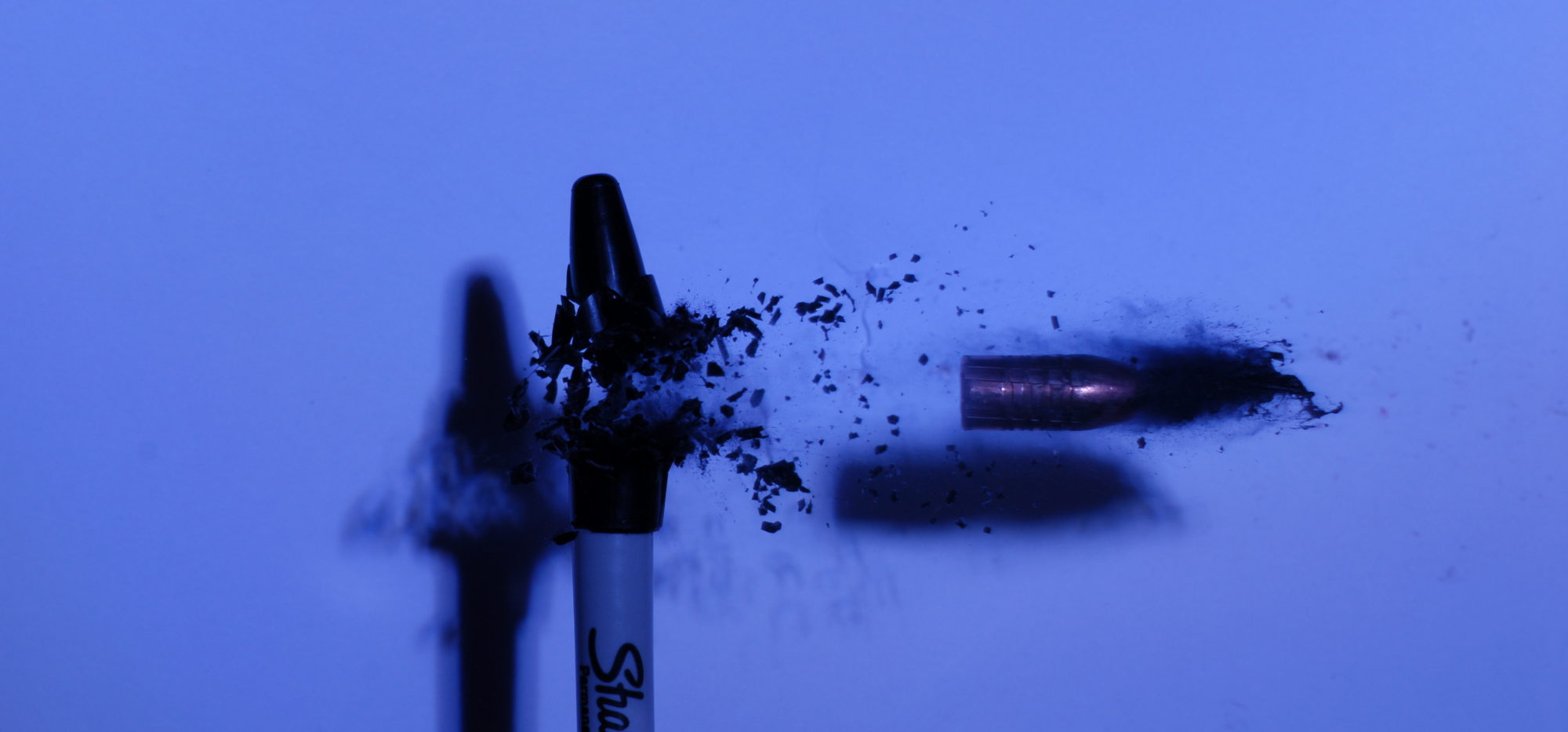


The .45 ACP was designed by John Moses Browning in 1904 as a new cartridge for his Colt automatic pistol, a design that would eventually become the famed Model 1911. For anyone unfamiliar with Browning’s work, he is one of the most influential firearms designers in history. His designs form the foundation of many of the firearms still in use today. One of his most important, yet often underappreciated, contributions is the short-recoil, tilting-barrel system that continues to dominate modern pistol design.

When discussing handgun effectiveness today, the debate between 9x19mm, .40 S&W, and .45 ACP is largely settled. The 9×19mm has become the preferred cartridge for military and law enforcement agencies worldwide. The .45 ACP has largely fallen out of favor for reasons that will be discussed later. However, from its introduction through the 1980s and 1990s, it dominated a significant portion of the pistol market.
The .45 ACP also happens to be one of my personal favorite cartridges. I do not get particularly invested in arguments over which caliber is “best.” In practical terms, most conventional service pistol cartridges used by military and law enforcement deliver similar muzzle energy and broadly similar terminal performance. From that perspective, carrying a pistol with greater magazine capacity makes sense. That said, there are characteristics in how the .45 ACP handles and shoots that I genuinely enjoy. It feels different than a 9x19mm or .40 S&W. That difference is somewhat subjective and difficult to quantify, but it is worth trying to explain.
Cartridge History
Before developing a new cartridge, there needs to be a clear purpose. What gap is the cartridge meant to fill? What problem does it solve that existing cartridges do not? Today, new cartridges seem to appear every year, many aimed at extracting incremental performance gains from the AR-15 platform. At the turn of the 20th century, however, firearms were still a relatively young technology, firmly in their adolescence and working through significant limitations.

Late-19th-century firearms design progressed slowly. Black powder, which had been in use for centuries, was difficult to improve upon. Fouling accumulated quickly, rifling clogged, accuracy suffered, velocities were limited, and the dense white smoke produced after firing readily revealed a shooter’s position. Manufacturing was labor-intensive and expensive. Parts were hand-fitted, and achievable precision was constrained by the machines and operators of the era.
Even advanced designs such as Gatling guns were pushing the limits of what contemporary technology allowed. Early models, including the 1876 Gatling gun, were still constrained by ammunition and manufacturing limitations, and it would not be until the early 1880s that Gatling guns were widely chambered in cartridges like the .45-70 Government.
This began to change rapidly with the Industrial Revolution. Advances in manufacturing allowed more complex designs to be produced economically, with levels of precision and repeatability that had not previously been possible. At the same time, a new propellant emerged that would ultimately replace black powder. The introduction of nitrocellulose, and later nitroglycerin-based double-base powders, largely overcame the limitations that had constrained firearms design for centuries.

The history of the .45 ACP traces directly back to the .45 Colt, a black-powder cartridge introduced alongside the Colt Single Action Army revolver. Adopted by the U.S. military following the 1872 pistol trials, the Single Action Army served as the standard service sidearm until 1892. During this period, the .45 Colt earned a reputation as an effective “man-stopper,” despite its relatively low velocity and heavy lead bullet.

In 1892, the U.S. Army replaced the Single Action Army with the Colt M1892 revolver, chambered in .38 Long Colt. One of the revolver’s primary advantages was its double-action capability. However, the .38 Long Colt failed to carry forward the stopping reputation of the .45 Colt.
If one were looking for the origins of the long-standing debate between smaller- and larger-caliber service pistols, this transition is a strong candidate. The .38 Long Colt fired a .358-caliber, 150-grain bullet at approximately 750 feet per second, producing roughly 187 foot-pounds of muzzle energy. By comparison, the .45 Colt fired a .454-caliber, 250-grain bullet at around 738 feet per second, generating approximately 302 foot-pounds of energy.
Dissatisfaction with the .38 Long Colt reached a peak following combat experience during the Philippine–American War, which concluded in 1902. In response, the U.S. Army issued an emergency authorization allowing previously retired Colt Single Action Army revolvers to be returned to service.
The Army’s next service revolver, the Colt New Service Model 1909, returned to the .45 caliber. This double-action revolver had been introduced in 1898 and reflected a renewed emphasis on bullet diameter and terminal effectiveness. When John Moses Browning began developing a new cartridge for his automatic service pistol in 1904, the shortcomings of the .38 Long Colt were still fresh in institutional memory. Compounding this was a military requirement that any new service pistol cartridge “should not be less than .45 caliber.”

Browning’s pistol ultimately won the U.S. service pistol trials and was adopted in 1911 as the Model 1911, later designated the M1911. The .45 ACP became the first pistol cartridge adopted by the U.S. military to use smokeless powder rather than black powder. The original loading that passed testing launched a 200-grain bullet at approximately 900 feet per second. This was later revised to the now-familiar 230-grain bullet at around 850 feet per second, producing roughly 396 foot-pounds of muzzle energy. This exceeded the performance of the original .45 Colt service loads.

The M1911 and .45 ACP served as the standard U.S. military sidearm and cartridge until the 1980s, when they were replaced by the Beretta M9 chambered in 9×19mm. Advocates of the .45 ACP often note, correctly, that it remains the longest-serving standard-issue pistol cartridge in U.S. military history.
The reputation of the .45 ACP as a man-stopper is largely a continuation of the reputation earned by the .45 Colt. While the cartridge was, and remains, an effective defensive round, its larger case size results in reduced magazine capacity. This is one area where the 9×19mm has a clear advantage, allowing more rounds to be carried while delivering broadly comparable terminal performance. Reputations aside, extensive testing has shown the 9mm to be as effective as the .45 ACP in stopping threats, which has contributed to its adoption by a majority of military and law-enforcement agencies worldwide.
The .45 ACP does retain one notable advantage. Most .45 ACP loadings are subsonic when fired from a pistol, including many lighter +P loads. This inherent subsonic performance makes the cartridge particularly well suited for suppression. Combined with its perceived stopping power, this characteristic led to its selection for the Offensive Handgun Weapon System program specified by United States Special Operations Command in 1989.

This program ultimately resulted in the development of the Heckler & Koch Mark 23, followed by the broader H&K USP series. The first Mark 23 pistols were delivered in 1996. The Mark 23 is a large pistol that demands large hands, but it is exceptionally soft-shooting and enjoyable to use, and it played a significant role in my personal interest in the .45 ACP.
There have been several attempts to modernize the .45 ACP, including cartridges such as the .45 Super, .45 Winchester Magnum, .45 GAP, and .460 Rowland. While all were developed and released commercially, none achieved widespread adoption, remaining largely technical curiosities. Even as a fan of the .45 ACP, it is difficult to ignore that the cartridge has gradually fallen out of favor and is likely to continue a slow decline in mainstream use.
Technical & Load Information

.45 ACP pressure standards are published by both SAAMI and CIP. SAAMI lists the maximum average pressure for standard .45 ACP ammunition at 21,000 psi. CIP lists a Pmax pressure of 18,800 psi (1,300 bar). While the numerical difference is modest, the two organizations apply pressure limits differently.
CIP employs a stricter methodology. Under CIP standards, no single cartridge may exceed the listed Pmax pressure. SAAMI, by contrast, allows individual shots to exceed the stated limit so long as the average pressure of a ten-shot sample does not exceed the maximum average pressure. As a result, ammunition loaded to meet CIP requirements must be more conservative overall. It is therefore reasonable to expect .45 ACP ammunition produced for, or sold into, CIP-regulated markets to be slightly less energetic than ammunition commonly available in the United States.

CIP does not recognize the +P designation. SAAMI lists the maximum average pressure for .45 ACP +P ammunition at 23,000 psi. Some manufacturers advertise ammunition as +P+, but this is not a SAAMI-recognized standard. If such ammunition exceeds 23,000 psi, as the designation implies, it should not be considered safe for use in firearms rated only for +P ammunition. It is also important to note that not all pistols are rated for +P use. Shooters must verify that their firearm is suitable before using higher-pressure ammunition. The ambiguity surrounding +P and +P+ classifications is likely one reason SAAMI has been reluctant to approve additional +P designations for other cartridges.
The service pressure of the .45 ACP is relatively low, particularly when compared to its European counterpart, the 9×19mm. Early on, this low operating pressure was desirable because it promoted long service life in both pistols and ammunition. As metallurgy and firearm design improved, however, modern 9mm pistols have achieved service lives comparable to those of early M1911 pistols, reducing this advantage.
From a reloading perspective, the .45 ACP is one of the easiest pistol cartridges to work with. It performs exceptionally well with cast bullets, and despite common warnings, I have not experienced excessive leading when using cast bullets in polygonal-rifled barrels compared to conventional rifling. There is a wide selection of bullet designs and powders available. For light target or plinking loads, I typically use fast-burning powders such as Unique or Bullseye. Care must be taken with these powders, as the .45 ACP case has sufficient volume to accept multiple charges, which would have catastrophic results.

I do not load to +P pressures. If I want to practice with +P ammunition, I simply rotate older defensive ammunition out of carry use and replace it with fresh stock. Cycling defensive ammunition every six months is a reasonable practice. For those seeking higher velocities within standard pressure limits, the .45 ACP responds well to slower pistol powders. Blue Dot, CFE Pistol, and Winchester 572 are good places to start.

The .45 ACP headspaces on the case mouth, so a taper crimp should be used when loading. Brass life is typically long. The case walls are relatively thin, making sizing easy, and the cartridge’s low operating pressure, combined with its straight-wall design, results in minimal case stretching.
Why the .45 ACP Still Deserves a Closer Look
The .45 ACP is often treated as a solved problem or a relic of an earlier era. Despite that, it remains one of the most influential pistol cartridges ever developed, shaping military sidearms, handgun design, and terminal ballistics research for more than a century. Its long service life, conservative operating pressures, and continued relevance make it worth examining beyond surface-level caliber debates.

While there is substantial data showing the 9mm Luger to be the more efficient cartridge overall, much of that advantage is driven by bullet design rather than caliber alone. If handgun ammunition were still limited to full metal jacket projectiles, the .45 ACP’s larger diameter would carry greater practical significance. That is no longer the case. Modern bullets expand more reliably, retain more of their mass, and penetrate more consistently than earlier designs ever did.

Muzzle energy alone is an incomplete metric. If it were the sole measure of effectiveness, .45 ACP +P loads might appear dominant. Terminal ballistics, however, depends on multiple variables, including penetration depth, expansion, and the balance of energy transfer within tissue.
Although the .45 ACP can produce roughly 25 percent more muzzle energy than the 9mm Luger in some loadings, that does not automatically translate into greater tissue damage. FBI testing, along with extensive laboratory and field data, has consistently shown that the .45 ACP is broadly comparable in effectiveness to other standard defensive pistol calibers, including the 9mm. The higher velocity and smaller diameter of the 9mm often result in deeper penetration, increasing the likelihood of disrupting skeletal structures or the central nervous system.

I have grown tired of “best caliber” arguments. They almost always devolve into loud opinions unsupported by data. A more useful approach is simply to carry what you shoot best. If you shoot a .357 SIG better than anything else, carry that. If you shoot a .45 ACP better than a 9mm, carry that. More often than not, the solution is not an extra tenth of an inch in bullet diameter, but a few hundred additional rounds of training.
This point was not lost on critics of the .38 Long Colt more than a century ago. They argued that the cartridge was underpowered and that soldiers were undertrained. Increasing bullet diameter proved easier than increasing training standards, so that was the path chosen.
If it seems like I am arguing against the .45 ACP, I am, at least a little. I do not value it because I believe it is superior. I value it because it is enjoyable to shoot. In my experience, pistols chambered in .45 ACP tend to recoil with more of a slow push than the sharper, snappier impulse common to lighter, faster cartridges. That is a subjective preference, not an objective advantage.
-Jay-


Revised 2/7/2026