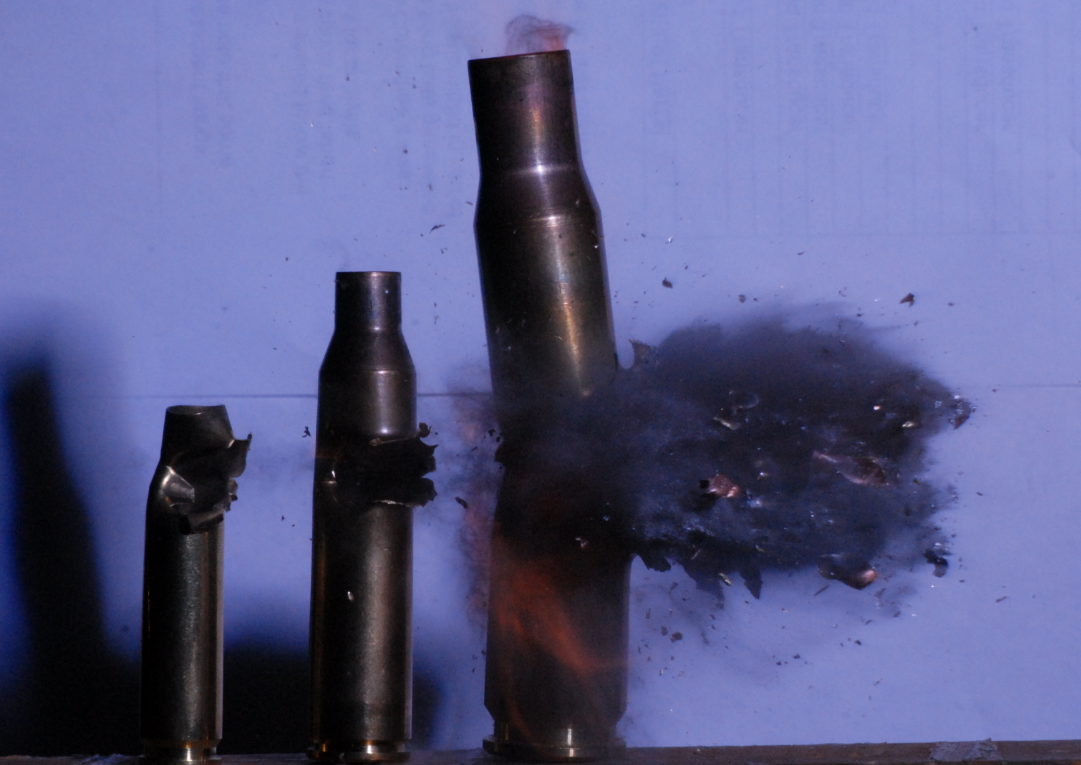


What’s a medium-caliber cartridge doing on a website primarily dedicated to small-caliber arms and ammunition? Call it curiosity, or call it ambition.
I was introduced to the 30×173mm through my interest in aviation. The A-10, now an iconic close air support aircraft, has long been one of my favorite platforms to study. If I ever had the opportunity to fly one, or even sit in the cockpit, I’d be beside myself.
Combine that fascination with a long-standing interest in ballistics, and it was only a matter of time before I found myself drawn to the 30×173mm cartridge.
A Brief History in CAS

For those less familiar with military aviation, the A-10 Thunderbolt II, better known as the A-10 Warthog, was the first aircraft the United States designed from the ground up specifically for the close air support (CAS) role. Earlier CAS platforms were typically adaptations of existing airframes rather than purpose-built designs.

The concept of close air support dates back to World War II, when aircraft on both the Allied and Axis sides were armed with increasingly large-caliber weapons to provide direct fire support against vehicles and fortified positions. These early efforts met with mixed success. Some platforms proved effective, while others struggled due to airframe limitations, inadequate protection, or insufficient pilot training. In many cases, pilots were learning CAS tactics in combat rather than receiving dedicated training beforehand.
The A-10 represented a different approach. Designed from inception to operate at low altitude under fire, it was built to absorb punishment and continue fighting. Beyond the GAU-8/A cannon, impressive in its own right, the aircraft incorporates numerous survivability features. These include a titanium “bathtub” surrounding the cockpit to protect the pilot from small arms fire and some medium-caliber threats, multiple self-sealing fuel tanks, triple-redundant flight control systems, and an airframe capable of remaining controllable after severe battle damage.
Despite its effectiveness, the A-10 has spent much of its service life under recurring budget scrutiny. Critics argue for retiring single-mission aircraft in favor of multirole platforms such as the F-35. These debates resurface every few years, yet the A-10 has repeatedly survived, receiving incremental upgrades and funding to remain operational. Current projections place its service life out to approximately 2040, if Air Force brass does not get their way.
As for civilian ownership, the U.S. military does not sell surplus combat aircraft to private individuals. Retired airframes are sent to storage facilities where they form part of the nation’s reserve fleet, intended for rapid reactivation if aircraft production cannot meet wartime demand. Eventually, these aircraft are demilitarized and scrapped.
Even if a demilitarized A-10 were somehow available, operating costs alone would be prohibitive. Flight-hour estimates place operating costs at roughly $7,000 per hour. By comparison, a Learjet 24,a twin-engine jet weighing roughly half as much, costs approximately $2,800 per flight hour, while a Cessna 172 operates in the $100–$200 per hour range. While such comparisons are imperfect due to differences in maintenance standards, propulsion systems, and mission profiles, they illustrate the scale of the disparity.
In short, owning an A-10 would be undeniably cool, but without a substantial bank account, it would remain firmly in the realm of fantasy.
Back to the 30x173mm

When the 30×173mm cartridge was conceived, the Cold War was at its height. The round was designed to be effective against contemporary Soviet armor, including main battle tanks, personnel carriers, and a wide range of supporting vehicles. Over time, it also proved effective against fixed and semi-fixed military assets such as radar installations and hardened equipment.
At the time of its development, the primary material used in armor-piercing (AP) projectiles was depleted uranium.
Depleted uranium (DU) possesses several material properties that make it well suited for use in armor-piercing munitions. Its high density—approximately 1.67 times that of lead—gives the penetrator exceptional sectional density, allowing it to concentrate energy on a very small impact area. More notably, DU exhibits a self-sharpening behavior under extreme stress. Rather than mushrooming or bluntly deforming, the penetrator’s nose shears in a way that continually exposes a sharp profile as it penetrates armor. This behavior helps maintain penetration efficiency through thick or layered armor plate.

For similar reasons, depleted uranium has also been used as a component in armored vehicle protection. In armor applications, DU is often combined with steel and ceramic layers to create dense composite structures capable of defeating modern kinetic penetrators, including tungsten-cored rounds.
In terms of hardness, depleted uranium measures approximately 47–49 on the Rockwell C scale. While this is softer than many tool steels, it is vastly harder than lead and sufficiently strong for penetrator applications. Beyond hardness and density, DU has another notable characteristic: it is pyrophoric. When subjected to extreme friction and heat during penetration, depleted uranium can ignite, burning at extremely high temperatures. Once a DU penetrator breaches armor, the remaining material may ignite, producing intense heat and secondary effects on the interior of the target, often described as similar in severity to an electrical arc flash.
Depleted uranium is less radioactive than the uranium used in nuclear reactors, containing roughly 60 percent of the radioactivity of naturally occurring uranium due to the removal of much of the U-235 isotope. While it would be incorrect to claim DU poses no radiological risk, studies have generally shown that exposure to both fired and unfired DU munitions is not a significant source of radiation poisoning. Potential health risks are more closely associated with chemical toxicity and prolonged exposure rather than acute radiation effects.
In recent decades, militaries have increasingly shifted away from depleted uranium in favor of tungsten-based penetrators. Tungsten offers slightly higher density and greater hardness than DU, though it is more difficult to machine and lacks DU’s pyrophoric behavior. While tungsten penetrators generally perform well in armor penetration, they do not self-ignite and are considered more politically and environmentally acceptable due to their radiological inertness.
Although the 30×173mm cartridge was designed primarily for armor-piercing applications, it has been fielded in a wide range of loadings, including tracer, incendiary, and high-explosive variants. Since its introduction aboard the A-10, the cartridge has also been adapted for use in ground-based weapon systems mounted on light armored vehicles.
What practical use does it have for a civilian?
Practical civilian use of the 30×173mm cartridge would be extremely limited. Still, it’s hard not to imagine it as the foundation for an extreme long range (ELR) rifle. In practice, however, the engineering challenges quickly outweigh the novelty, even for a single-shot design.
To begin with, the cartridge’s often-quoted muzzle velocity of approximately 3,500 feet per second is achieved using an aircraft cannon with a barrel length on the order of eight feet. While a shorter barrel would be possible, meaningful velocity retention would still require a long, heavy, and unwieldy barrel by rifle standards.
Recoil management presents an even greater challenge. Launching a projectile weighing roughly 3,700 grains with a powder charge approaching 2,000 grains produces an enormous recoil impulse. Any rifle capable of handling this safely would require substantial mass to slow that impulse, likely supplemented by aggressive muzzle braking and some form of recoil buffering. While such measures could make the system survivable, they would do so at the expense of portability, practicality, and ease of use.
Component availability, surprisingly, is not the primary obstacle. Suitable slow-burning propellants such as US 869 exist, and projectiles and cases can be sourced, albeit from limited suppliers. Ignition, however, becomes non-trivial at this scale, and reliable initiation of such large powder charges would require careful primer and ignition system design. While many 30×173mm cartridges employ electronic primers, percussion-primed variants do exist, particularly in training and legacy configurations.

The final, and likely decisive, obstacle is legality, at least in the United States. As far as I am aware, the Bureau of Alcohol, Tobacco, Firearms and Explosives does not permit the registration of newly manufactured destructive devices chambered for modern fixed ammunition, which a 30×173mm rifle would almost certainly be classified as due to bore diameter. Historical artillery pieces, such as German 88mm guns, are privately owned in limited numbers and can be fired with live ammunition, but they are rare, expensive, and exist largely due to their historical status.
That said, there are examples of non-historical destructive devices that have received limited approval for civilian ownership under specific circumstances. These exceptions, however, are narrow, heavily regulated, and far from guaranteed, making the 30×173mm firmly a theoretical exercise rather than a realistic civilian project.
Examples of Civilian Made and Owned Cannonry
Before getting into specific examples, it’s worth clarifying one point. Historically, civilian arms ownership in the United States was not meaningfully separated from the arms carried by the state. The modern reality, where civilian ownership hinges on regulatory allowances rather than capability, is a departure from that tradition. For the purposes of this discussion, however, the focus is not on constitutional theory, but on how current law treats large-caliber, direct-fire weapons.

For clarity, this discussion is limited to direct-fire weapons, systems aimed directly at a visible target, with adjustments made for wind and bullet drop. This stands in contrast to indirect-fire weapons, such as mortars and howitzers, where the weapon is aimed along a ballistic arc to engage targets that are not directly visible.
As engagement distances increase, even direct-fire weapons begin to resemble indirect-fire systems. At extreme range, projectile flight paths involve significant arc, long time of flight, and substantial environmental influence. Historically, this is not a new concept. Volley fire sights on older military rifles existed precisely to allow infantry to engage distant targets using indirect ballistic trajectories.
20×102mm Vulcan – Anzio

The most notable example of a large-caliber, direct-fire rifle available to civilians is the 20mm rifle produced by Anzio Ironworks. Chambered in 20×102mm Vulcan, the rifle launches a projectile measuring approximately 0.787 inches in diameter—roughly comparable to a 12-gauge bore.
In its magazine-fed configuration, the rifle features a 49-inch barrel and weighs approximately 59 pounds unloaded. Anzio also offers single-shot variants, as well as vehicle mounts designed to interface with a truck’s fifth wheel. Unsurprisingly, suppression is optional—because why not lean fully into the absurdity.
Pricing for the magazine-fed rifle has historically started around $12,000.

Anzio also offers a wildcat cartridge based on the 20×102mm case, necked down to .50 caliber. This configuration reportedly increases velocity by approximately 30 percent and produces muzzle energies exceeding 50,000 foot-pounds.
Reported maximum engagement distances approach 5,000 yards, or roughly 2.6 miles. At these distances, optics become a significant limitation. Even high-magnification systems struggle to resolve targets, and spotting impacts becomes increasingly difficult.
From a regulatory standpoint, the 20×102mm cartridge has not received a sporting exemption from the Bureau of Alcohol, Tobacco, Firearms and Explosives. As a result, rifles chambered in this caliber are classified as destructive devices and require NFA registration, fingerprinting, and a $200 tax stamp, making acquisition more involved than a standard Form 4473 transfer.
.950 JDJ
The .950 JDJ is another frequently cited example, though it remains largely a novelty. Based on the 20×110mm Hispano case necked up to accept a 0.950-inch, 3,600-grain projectile, the cartridge was developed by SSK Industries. Only three rifles were ever produced, and commercial ammunition is no longer available.

SSK Industries, now owned by Lehigh Defense, successfully petitioned for a sporting exemption for the .950 JDJ. As a result, rifles chambered in this caliber are not classified as destructive devices and can be transferred like conventional firearms.
Whether the cartridge was intended as anything more than a technical demonstration is unclear. Novelty alone is a valid justification, but the cost, recoil, and limited utility likely prevented any broader adoption.
So What’s Being Used to Set Records?
The idea of using the 30×173mm as an extreme long-range platform follows the same logic that led to rifles like the Anzio: “because it’s possible.” To assess whether that logic holds up, it’s worth examining what is actually being used to set ELR records.
A two-mile shot is difficult to visualize. My longest confirmed hit was at 1,950 yards using a .338 Lapua Magnum, achieved at a range in Price, Utah. Even at that distance, environmental conditions and shot-to-shot variation quickly dominate outcomes. Finding locations capable of safely supporting this kind of shooting is itself a challenge, one more easily met in the western United States due to large tracts of public land.
In July 2020, Paul Phillips set a world record by striking a target at four miles using a rifle chambered in .416 Barrett. The shot reportedly required 69 attempts by a 13-person team. Bullet apogee exceeded 2,300 feet above the bore line, and time of flight approached 22 seconds. Even with a hypothetical 0.5 MOA system, group dispersion at that distance would measure hundreds of feet.
That 2020 record did not stand for long. In 2022, a team from Nomad Rifleman in Wyoming set a new apparent world record with a confirmed hit at 7,774 yards—approximately 4.4 miles—again using a rifle chambered in .416 Barrett. Led by Scott Austin and Shepard Humphries, the shot required 69 attempts, a 24.5-second time of flight, and an elevation correction exceeding 1,000 MOA. Even with extensive preparation, custom optics solutions, and a 13-person support team, the hit was acknowledged by the shooters themselves as non-repeatable under changing conditions. The achievement underscores an important reality of extreme long-range shooting: success at these distances is driven more by environmental modeling, optics, and logistics than by further increases in projectile diameter.

The Barrett Manufacturing .416 Barrett—based on a necked-down .50 BMG case—was purpose-designed for ELR shooting. Its relatively small caliber compared to 20mm systems, combined with high ballistic coefficients and manageable recoil, highlights an important point: success at extreme range is not driven simply by projectile diameter.
At distances approaching 7,000 yards, shooters contend with drag, gravity, wind, Coriolis effects, spin drift, and Magnus effects. Projectile behavior begins to resemble terminal velocity conditions in the vertical axis, while horizontal drift remains highly sensitive to atmospheric variation. None of these challenges are solved by simply moving to a larger caliber.
In practice, both economic and practical constraints explain why ELR development has favored cartridges like the .416 Barrett over medium-caliber systems. Larger projectiles increase cost, recoil, and logistical complexity without simplifying the physics involved.
Ammunition and Component Sources
It is one thing to own a medium-caliber firearm; it is another thing entirely to keep it fed. Unlike conventional small arms cartridges, components for systems of this scale are not produced by mainstream manufacturers such as Remington or Winchester. Availability is largely limited to military surplus channels and a small number of specialty suppliers.
The most comprehensive source I have found is CDVS Ltd., a veteran-owned military surplus dealer. Their inventory includes inert projectiles, loaded training ammunition, primed cases, electronic primers, and components spanning calibers from 14mm up to 57mm. All projectiles offered are non-explosive practice types, but the breadth of available components is notable given how niche this market is.

As someone who enjoys ballistics as much as the engineering behind it, this kind of surplus catalog is hard not to appreciate. At a minimum, many of these items make for excellent conversation pieces. Even so, some calibers are more approachable than expected. The 20×102mm Vulcan, for example, can be found for roughly $35 per round. Expensive, certainly, but not entirely out of reach for occasional use.
By comparison, sourcing 30×173mm ammunition is far more difficult. Factory-loaded target ammunition often approaches $300 per round when available. Based on currently observed component pricing, a theoretical reload cost could fall in the vicinity of $80 per round, driven largely by the cost of pre-primed cases. Even at that level, this assumes access to specialized tooling and component supply chains that place the cartridge well outside the realm of practical routine use.
A Solution in Search of a Problem
From an engineering perspective, the more interesting question is whether a cartridge like the 30×173mm has any practical use outside of military aviation. Given the questionable feasibility of repurposing it as an extreme long-range rifle—ammunition cost alone being a major limiter—it makes sense to ask whether there are industrial applications where its characteristics might actually be useful.
There is precedent for this kind of thinking. Recoilless rifles, often approaching or exceeding 100mm in caliber, are routinely used for avalanche control. These systems exist specifically to deliver a large amount of kinetic energy to a precise, inaccessible location in a controlled manner. Similar logic appears in industrial settings, such as foundries and large cooling systems, where 8-gauge industrial shotguns firing three-ounce slugs are used to clear obstructions, break refractory plugs, or dislodge heavy scale buildup.

These tools occupy a unique regulatory space. The Bureau of Alcohol, Tobacco, Firearms and Explosives grants considerable latitude for industrial devices of this nature, including allowances for suppression, without requiring NFA registration. The justification is straightforward: these systems are large, specialized, and effectively immobile. They are tools, not arms intended for general use.
Given that context, a smaller-scale trial would be the logical starting point before considering something as large as a 30mm system. The 20×102mm Vulcan is a practical candidate. While still expensive, rifle costs on the order of $10,000 and per-shot costs around $40, it is commercially available and delivers substantial energy. In theory, it could be sufficient to destabilize marginal fracture zones or initiate controlled rock fall. Whether it would do so reliably is difficult to determine without testing.
This question becomes more concrete when viewed through the lens of mining operations. Much of my experience comes from hard-rock open-pit mining, often in relatively small pits operating under tight budgets. Situations would occasionally arise where a potential rock fall was clearly visible, but options for mitigation were limited. In some cases, blasters could lower a booster charge near the hazard, and the resulting detonation would safely dislodge the material.
That approach, however, carries significant setup time, regulatory burden, and cost. In other cases, conditions developed where work had to continue beneath a known hazard while mitigation options were evaluated. Coming from a firearms background and being aware of existing industrial projectile systems, I explored whether large-bore kinetic solutions, such as 8-gauge industrial shotguns. might offer a controlled alternative.
The limitation was energy delivery. Some potential failures required more energy and greater precision than a three-ounce slug could reliably provide. Accuracy and effective range were also concerns. Without a clear analytical justification, it was difficult to gain approval for any form of trial, and a poorly executed test would have risked inconclusive or misleading results.
That line of reasoning naturally leads to something larger. A system capable of delivering significantly more energy, with greater precision and stand-off distance, begins to look less absurd and more situationally useful. In that context, a 30×173mm platform starts to make conceptual sense. A 3,700-grain projectile launched from a 60-inch barrel at approximately 3,200 feet per second carries on the order of 87,000 foot-pounds of muzzle energy, enough to meaningfully affect rock mass stability at distances where other tools fall short.

Whether such a system would ever be practical is an open question. But as a thought experiment grounded in real industrial constraints, it is at least defensible.
Technical Specifications
Tracking down dimensional specifications for the 30×173mm has been more work than expected. I ultimately located a NATO standard and used it as the primary reference when building my model. One key detail is missing, however: unlike many military cartridge standards, the 30×173mm documentation I found does not specify internal case wall thickness. To complete the model, I estimated wall thickness based on prior experience drawing cartridge cases and a published internal case capacity of 173.30 cc.

A few notes on the drawing:
- Primer pocket dimensions: I could not locate definitive specifications, so I used .50 BMG primer pocket dimensions as a reference. This should be treated as an approximation until verified against a primary source.
- Case material: Because the cartridge was developed for aircraft cannon use, cases are commonly aluminum rather than brass, depending on loading and manufacturer.
- Pressure data: Average pressure values were referenced from QuickLOAD, while maximum pressure limits were taken from the applicable NATO STANAG documentation.
Wrapping It Up
Sometimes the most interesting cartridges are also the least practical to own. That doesn’t make them unworthy of attention. Researching their design intent, exploring edge-case applications, and running the numbers can be rewarding in its own right. In the case of the 30×173mm, it becomes clear that outside of novelty, or the very real need for an aircraft-mounted anti-armor cannon, there is little practical justification for civilian ownership. The cartridge was built to do one thing exceptionally well: defeat armored vehicles from the underside of a warplane.
For me, this project was less about ownership and more about understanding. Digging through technical standards, comparing performance against other cartridges, and following the threads that lead to topics like extreme long-range shooting is where the real value lies. Would it be cool to build and own such a cannon simply because it exists and almost no one else has one? Absolutely. But once the engineering, legal, logistical, and economic realities are laid out, the justification quickly fades.
Context matters. The 30×173mm makes perfect sense where it was intended to live—bolted to an aircraft, fed by a drum, and aimed at armored targets from the sky. Remove it from that environment, and what remains is not a practical tool, but a fascinating technical artifact.
In the end, the 30×173mm is exactly what the title suggests: a cartridge in search of a plane.
-Jay-


Revised 2/7/2026