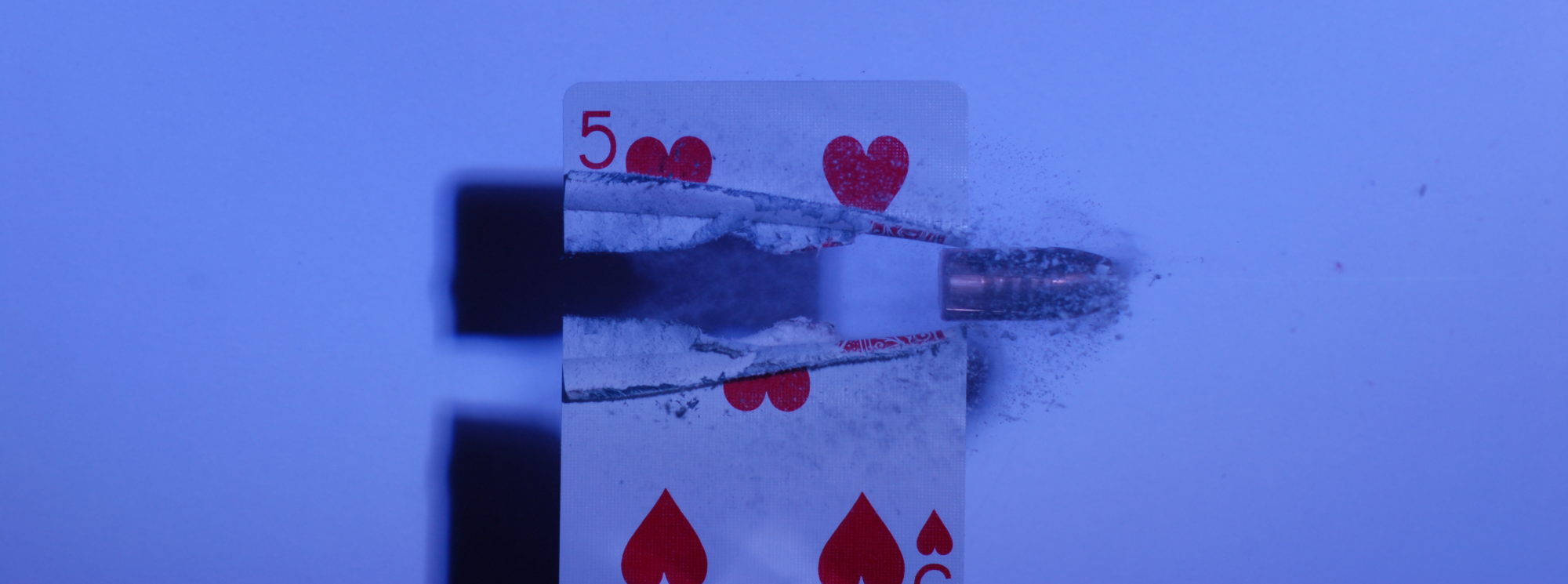


The .303 British, often shortened to .303 Brit, is a cartridge pushing 140 years of age, first introduced in 1888 and involved in nearly every major conflict of the 20th century, making it one of the most storied military cartridges in history. While the 7.62×54R holds the distinction of being the longest continuously serving military cartridge, entering service in 1891 and remaining in use today, the .303 British predates it by several years and, while no longer formally issued by any modern military, is still occasionally encountered in conflict zones such as Iraq and Afghanistan.

Despite its age, the cartridge has stood the test of time remarkably well and remains a practical and effective option today, much as it was in the early 20th century. Unless you have a particular interest in military firearms, or have spent time watching channels like Forgotten Weapons, the .303 British has largely faded from the modern shooting conversation. To the best of my knowledge, no major U.S. firearms manufacturers currently offer new-production rifles chambered in .303 British outside of custom builds. Barring an unexpected resurgence, the cartridge appears destined to continue its gradual slide into obscurity.
History
The .303 British is a unique cartridge and one of the longest-serving military cartridges in history, acting as Britain’s primary service round through both World Wars and seeing use in nearly every major conflict of the 20th century. While the 7.62×54R holds the distinction of being the longest continuously serving military cartridge, entering service in 1891 and remaining in use today, the .303 British predates it by several years. Although no longer formally issued by any modern military, it is still occasionally encountered in conflict zones such as Iraq and Afghanistan.
The cartridge as we know it today differs significantly from the version first introduced alongside the Lee-Metford rifle in 1888. While the .303 British was always intended to be used with the newly developed smokeless powders, the earliest service loads were initially charged with black powder. As a result, the developmental history of the .303 British closely mirrors the broader military transition from black powder to smokeless propellants.

Early smokeless powders looked very different from the compact, granular propellants used today. The most notable of these was cordite, a composite propellant made primarily from nitrocellulose, nitroglycerin, petroleum jelly, and stabilizing agents. Cordite was manufactured by extruding the mixture into long cords, which were then cut to a prescribed length for loading into cartridges. Production of cordite continued until 1945, and examples today are largely limited to surviving military surplus ammunition.
Cordite burned at significantly higher temperatures than black powder, a characteristic that accelerated barrel wear in rifles designed around black powder fouling and heat profiles. This proved problematic for the Lee-Metford rifle, which featured shallow rifling intended to reduce black powder fouling. When subjected to prolonged use with cordite-based ammunition, the rifling eroded rapidly. The Lee-Enfield rifle, introduced in 1904, addressed this issue by adopting deeper, square-cut rifling better suited to the higher temperatures and pressures of smokeless propellants.
The ammunition itself went through several revisions following its introduction. Early .303 British cartridges used a 215-grain round-nose projectile, which later evolved into a partially jacketed design intended to promote expansion. These expanding bullets became colloquially known as “Dum Dum” rounds, named after the Dum Dum Arsenal near Calcutta, India, where they were manufactured.

The Mark VI cartridge, introduced in 1904, featured a 215-grain round-nose bullet propelled by a cordite charge. British use of expanding ammunition, however, drew international criticism and led to formal objections raised during the Hague Convention of 1899. These objections ultimately resulted in restrictions on the use of expanding bullets in warfare and prompted further redesign of the .303 British projectile.

In response, the British adopted the Mark VII cartridge in 1910. This load replaced the 215-grain round-nose bullet with a lighter 174-grain spitzer projectile. The Mark VII bullet featured a rearward center of gravity, achieved by using a lighter material in the forward portion of the core and lead in the rear. While not designed as an expanding bullet, this construction increased the likelihood of yaw upon impact, which was observed to produce significant wounding effects while offering improved external ballistics over earlier designs.
The Mark VII cartridge became the standard general-issue rifle load for the .303 British and is generally regarded as the most well-balanced service loading for the cartridge. Other variants, including armor-piercing and incendiary rounds, were produced in smaller quantities. The Mark VIII cartridge, developed primarily for use in the Vickers machine gun, used a longer, boat-tailed bullet and was loaded to higher pressures. These higher pressures accelerated wear in Lee-Enfield rifles, which were not proofed for sustained use with Mark VIII ammunition. As a result, surplus ammunition marked “Mark VIII” should not be fired in standard Lee-Enfield rifles.
Primers used in early .303 British military ammunition commonly contained mercury fulminate. Over time, mercury from the primer compound could migrate into the cartridge brass, forming an amalgam that weakened the case. While this was not necessarily a concern during the original service life of the ammunition, it presents a significant issue with aging military surplus cartridges today. In addition, these primers were corrosive, leaving hygroscopic salts in the bore that attracted moisture. Improper cleaning after firing corrosive ammunition led to severe pitting in many otherwise serviceable rifles.

The .303 British served alongside the U.S. .30-06 Springfield and opposed Germany’s 7.9×57mm Mauser during both World Wars. Of the three cartridges, the .303 British was generally the least powerful. It typically fired a heavier bullet than the .30-06 but at a lower muzzle velocity. While this allowed the projectile to retain energy reasonably well at distance, the lower velocity resulted in a more arcing trajectory, making longer-range engagements more challenging compared to both the .30-06 and the 7.9×57mm Mauser. The German cartridge, in particular, benefited from a more streamlined projectile that offered superior long-range performance.

Following World War II, Britain transitioned away from the .303 British in favor of the 7.62×51mm NATO cartridge, formally adopting it in 1957. The 7.62 NATO operates at significantly higher pressures and is broadly comparable to the commercial .308 Winchester. While some surplus Lee-Enfield rifles were later rechambered by civilian gunsmiths to 7.62 NATO, this practice was generally discouraged due to the higher operating pressures and the rear-locking design of the Enfield action.
A proper adaptation of the Enfield platform to 7.62 NATO did exist in the form of the Ishapore 2A and 2A1 rifles, produced in India for front-line service. Approximately 250,000 units were manufactured before production ended in 1974, making them the last bolt-action rifles built expressly for use as a primary service rifle.
The .303 British remained in limited service with rear-echelon and reserve forces into the early 2000s. Most notably, it continued to be used by the Canadian Rangers until its retirement in 2018. With a service life spanning more than a century, the .303 British stands as one of the most enduring military cartridges ever fielded, surpassed only by the 7.62×54R.
Technical Specs

The .303 British is recognized by both SAAMI and CIP, with published specifications available from each organization. This cartridge is a good example of how SAAMI and CIP can define different, yet functionally comparable, standards. Under SAAMI specifications, the maximum average pressure (MAP) is limited to 49,000 psi, while CIP lists a PMax of 52,939 psi. These differing values reflect differences in how pressure limits are defined and measured rather than a meaningful disparity in safety margins. Under CIP methodology, no single shot may exceed the stated pressure limit, whereas SAAMI limits are based on the average pressure of a ten-round sample.
The .303 British headspaces on its rim. CIP specifies a headspace of 1.63 mm (0.0641 in), while SAAMI lists a minimum headspace of 1.63 mm (0.0641 in) and a maximum of 1.80 mm (0.071 in). This relatively wide allowable range reflects the cartridge’s military origins and the need for reliable function under adverse conditions.
According to SAAMI specifications, the maximum case length is 2.222 inches (56.44 mm), with a minimum case length of 2.202 inches (55.93 mm). CIP likewise specifies a maximum case length of 56.44 mm (2.222 in) but does not publish a minimum case length. In practice, the SAAMI minimum of approximately 0.020 inches (0.51 mm) below maximum is commonly treated as a trim-to length when preparing brass.
The “.303” designation refers to the bore diameter measured across the lands prior to rifling. The nominal bore diameter is 0.303 inches, while the groove diameter typically ranges from approximately 0.311 to 0.314 inches. While bullets in the 0.308–0.309 inch range can be fired safely in many .303 British rifles, best accuracy is generally achieved with bullets measuring 0.311 to 0.312 inches. Due to wide variations in rifling depth during wartime production, particularly among military surplus rifles, slugging the bore is strongly recommended to determine the optimal bullet diameter.
Most SMLE-pattern rifles were manufactured with a 1:10-inch twist rate, which is typical for .30-caliber rifles and suitable for stabilizing bullets weighing up to approximately 220 grains. Minor variations do exist across production runs, but the 1:10-inch twist is representative of the platform as a whole.

There are small dimensional differences between SAAMI and CIP minimum chamber drawings, most notably in the shoulder and throat geometry. These variations are minor and are not expected to produce meaningful differences in pressure or internal ballistic performance in properly loaded ammunition.
Known Issues

There are two primary issues associated with the .303 British that shooters and reloaders should be aware of.
The first is inherent to rimmed cartridges in general. Improperly loading cartridges into a magazine can result in a condition known as rim lock. Rim lock occurs when the rim of the upper cartridge overlaps the rim of the cartridge beneath it. When the bolt attempts to strip the top round from the magazine, both cartridges are forced forward simultaneously, resulting in a feed jam.

When a magazine is loaded in this manner, chambering the round becomes impossible, as the upper cartridge attempts to drive the lower cartridge forward. In practice, this condition is often caused by a single round being carelessly inserted into an otherwise properly loaded magazine. It is an easy mistake to make and one that requires attention when loading SMLE magazines.
The second major issue relates to the design of the SMLE action itself. The Lee-Enfield locks at the rear of the bolt, which results in a degree of elastic flex under firing. During ignition, chamber pressure holds the forward portion of the case firmly against the chamber walls while rearward force drives the bolt backward. This causes the rear of the cartridge case to stretch, concentrating strain just forward of the case web.
Over repeated firings, this stretching leads to thinning of the case wall in that area, eventually resulting in case head separation, a potentially dangerous failure mode.

Externally, impending case head separation often appears as a bright circumferential ring just forward of the case head. Internally, thinning can be detected by probing the inside of the case with a bent wire or paperclip. If thinning is detected by feel, the case should be discarded immediately.

Excessive headspace exacerbates this issue. Given the age and service history of many Lee-Enfield rifles, generous headspace is not uncommon. Correcting headspace can improve brass life, but it does not eliminate the underlying case stretching inherent to the rear-locking action. As a result, .303 British brass typically has a relatively short service life, commonly yielding five to seven reloads depending on the rifle. Some shooters may experience slightly better results, while others may see fewer reloads before failure.
Most military surplus .303 British ammunition uses Berdan-primed cases, making them impractical to reload. Additionally, the age of the brass combined with inconsistent quality often results in neck splits upon the first firing. As discussed previously, the majority of surplus ammunition is also corrosive due to the use of mercury fulminate primers. Given the availability of modern, Boxer-primed commercial brass, there is little incentive to reuse surplus cases.
Beyond corrosive residue, aging surplus primers may also be unreliable. Some may fail to ignite entirely, while others can produce hang fires. A hang fire is a delayed ignition occurring after the firing pin strike, typically measured in milliseconds. Delays of approximately 20 milliseconds or more become noticeable to the shooter, though in rare cases ignition can be delayed by several seconds. When a hang fire is suspected, the rifle should be kept pointed safely downrange for at least 30 seconds. If the cartridge does not discharge, it should then be carefully extracted.
The Utility of the 303 Brit Today
Given the age of the cartridge, it is reasonable to question what practical utility the .303 British still offers today. Why spend time with the .303 Brit when cartridges like the .308 Winchester or .30-06 Springfield are far more common and objectively superior in many respects? It is a fair question, and one worth addressing.
The simplest answer is availability. There are still a large number of rifles in circulation chambered for the .303 British. While new-production rifles are rare outside of custom builds, used rifles—particularly military surplus—remain relatively easy to find in gun shops, pawn shops, and private sales. Sporterized rifles, often dismissed by collectors, can frequently be found at attractive prices. Rifles that have been cut down or modified for hunting can make excellent project guns and provide an opportunity for owners to learn basic gunsmithing skills while keeping a historically significant cartridge in use.

Thanks in part to the continued popularity of the Russian 7.62×39 and 7.62×54R cartridges, there remains a healthy selection of bullets in the appropriate .310–.312 inch diameter range. Bullet weights from approximately 120 grains to 220 grains are readily available, covering a wide range of applications. I have even experimented with 90- and 100-grain bullets originally intended for the .32 ACP or more recently the 30 Super Carry. At roughly .3125 inches in diameter, these bullets load and shoot surprisingly well from a Lee-Enfield, producing impressively high velocities.
Modern, progressively burning powders have also breathed new life into the .303 British. Powders such as Winchester StaBALL 6.5 offer improved consistency and performance compared to the propellants available during the cartridge’s early service life.

Traditional medium-burn-rate rifle powders like H322 and H335 remain solid choices for the .303 British. With newer progressive powders such as StaBALL 6.5, it is possible to meet or exceed the performance of the original 174-grain military loading, achieving velocities around 2,600 feet per second—respectable performance for a cartridge approaching 140 years of age.

The bolt-action nature of the Lee-Enfield also makes it well suited for cast-bullet loads. Several bullet molds are available specifically for the .303 British, and I have found these loads to perform particularly well with Trail Boss or fast-burning powders like Unique. These reduced loads—often referred to affectionately as “mouse fart” loads—are quiet, enjoyable to shoot, and tame the recoil of the full-power service cartridge to levels comparable to a .22 LR. They are ideal for casual plinking at 50 to 75 yards and, due to their low operating pressures, are easy on brass.
Despite its age, the .303 British remains a capable hunting cartridge. It has been used successfully on game ranging from small animals to large and dangerous species. In practical terms, it is generally considered well suited for game up to mule deer. While there are undoubtedly hunters who have taken moose or elk with the cartridge, for animals of that size it is prudent to choose a more powerful and widely supported option such as the .30-06 or .308 Winchester.
Why it’s a Favorite
The .303 British earns a place on my personal favorites list for a simple reason: it was the first cartridge I truly got to know. There is something deeply human about developing an attachment to the first rifle or cartridge you spend real time with. First experiences tend to leave a mark, for better or worse.
I still enjoy loading and shooting the .303 British today. Despite the age of the rifles and the cartridge’s relative obsolescence, it remains capable of taking game, producing respectable accuracy, and delivering an enjoyable day at the range. More than once, it has sparked conversations as people pause to ask what old warhorse I’m shooting. The SMLE action is smooth and fast, with a feel that invites manipulation even if it is not the strongest bolt action ever produced. The rifle I own features a classic two-stage trigger with a clean, predictable break. Compared to other rifles of the same era, particularly the Mosin-Nagant, the Lee-Enfield is simply a pleasure to shoot.
Not every shooting experience needs to revolve around the flattest trajectory or the tightest possible groups. Sometimes the appeal lies in nostalgia, in an appreciation for earlier eras, and for the people who carried these rifles in far less comfortable circumstances. Interest in military rifle shooting appears to be on the rise, whether through programs like the Civilian Marksmanship Program or through private matches and clubs. These rifles continue to show up on firing lines, continue to win medals, and continue to attract dedicated collectors around the world.
-Jay-


Revised 2/7/2026